Discover the Best Routes for Climbing Kilimanjaro with expert tips, route comparisons, and success insights to help you choose the perfect trek.
Planning to climb Mount Kilimanjaro? Discover the best routes, success rates, difficulty levels, and expert tips to help you choose the right trail for your adventure.
Best Routes for Climbing Kilimanjaro
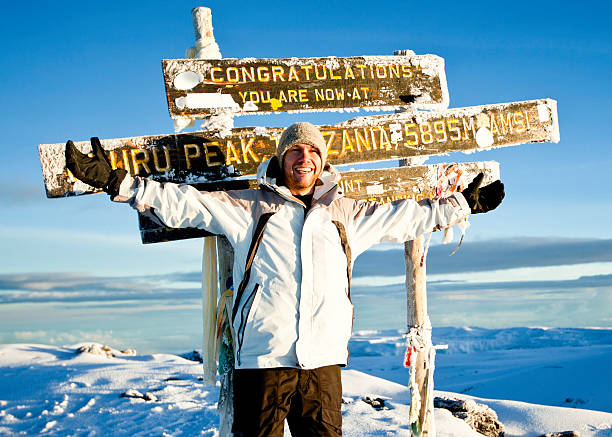
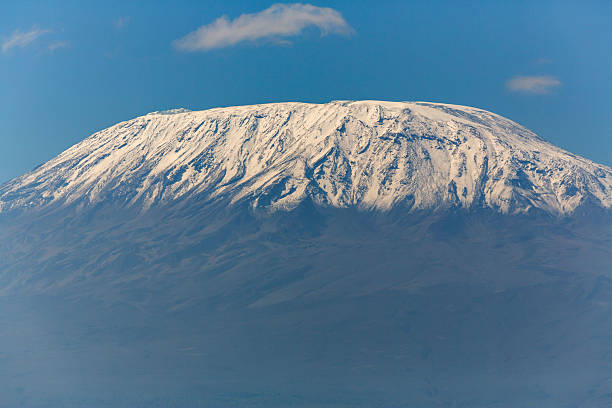
Climbing Mount Kilimanjaro, the tallest mountain in Africa, is a dream adventure for thousands of travelers every year. Standing at 5,895 meters (19,341 feet) above sea level, it offers one of the most accessible high-altitude climbs in the world. However, choosing the Best Routes for Climbing Kilimanjaro is crucial to maximize your success rate and enjoy the journey safely.
Each route offers unique scenery, difficulty levels, acclimatization profiles, and trekking experiences. Some routes are ideal for beginners seeking gradual acclimatization, while others are designed for experienced trekkers looking for a more challenging adventure.
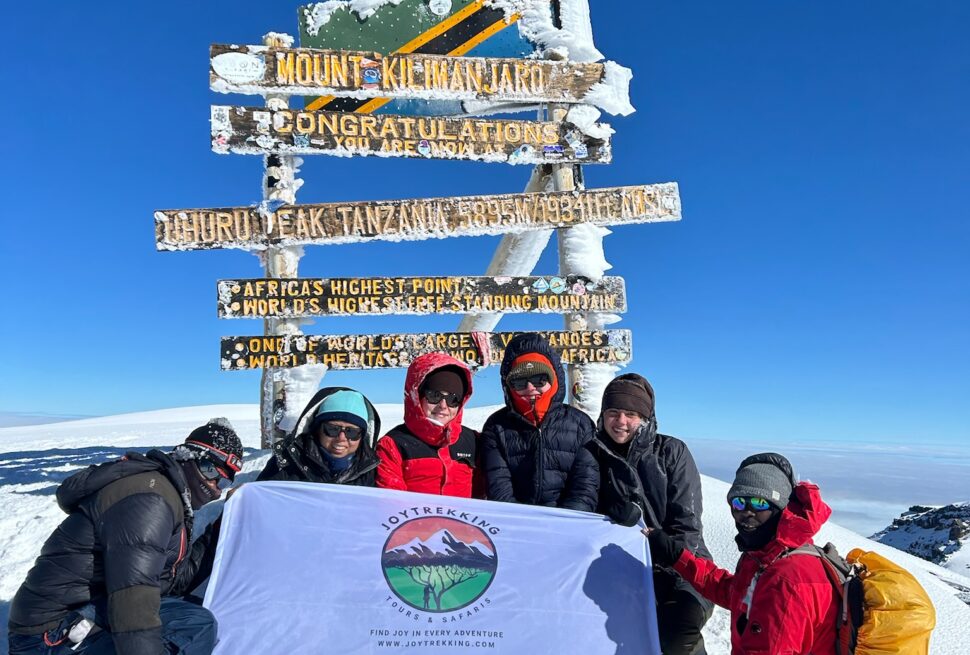
In this comprehensive guide from JoyTrekking Tours & Safaris, we break down the top Kilimanjaro routes, compare their advantages, and provide expert insights to help international travelers choose the perfect trek.
Quick Summary
- Best overall route: Lemosho Route
- Best for beginners: Machame Route
- Highest success rate: Northern Circuit Route
- Shortest route: Marangu Route
- Most scenic: Lemosho Route
- Most remote experience: Rongai Route
- Recommended duration: 7–9 days for better acclimatization
- Best months to climb: January–March and June–October
Why Choosing the Best Routes for Climbing Kilimanjaro Matters
Selecting the right route determines your success rate, comfort, safety, and overall experience. While Kilimanjaro does not require technical climbing skills, altitude sickness is the biggest challenge.
According to the Kilimanjaro National Park Authority, climbers who spend 7 days or more on the mountain have significantly higher summit success rates.
Your chosen route affects:
- Acclimatization time
- Scenery and landscapes
- Crowds on the trail
- Difficulty level
- Cost of the climb
For further mountain safety guidance, refer to the International Climbing and Mountaineering Federation which provides global standards on altitude trekking.
Comparison of the Best Kilimanjaro Routes
| Route | Duration | Difficulty | Success Rate | Scenery | Crowd Level |
|---|---|---|---|---|---|
| Lemosho | 7–8 days | Moderate | Very High | Excellent | Medium |
| Machame | 6–7 days | Moderate | High | Excellent | High |
| Marangu | 5–6 days | Moderate | Medium | Good | High |
| Rongai | 6–7 days | Moderate | High | Good | Low |
| Northern Circuit | 8–9 days | Moderate | Very High | Excellent | Very Low |
| Umbwe | 5–6 days | Difficult | Low | Very Good | Very Low |
| Shira | 7 days | Moderate | High | Very Good | Medium |
Best Routes for Climbing Kilimanjaro Explained
1. Lemosho Route – The Most Scenic Route
The Lemosho Route is widely considered the best overall Kilimanjaro route due to its incredible scenery and excellent acclimatization profile.
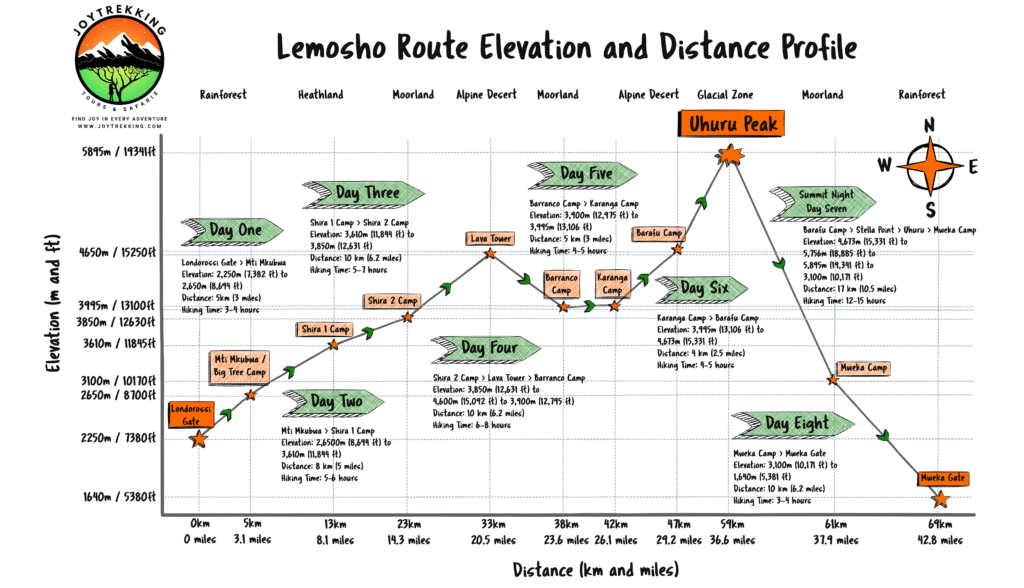
Highlights:
- Starts on the western side of Kilimanjaro
- Crosses rainforest, moorland, and alpine desert
- Offers stunning views of the Shira Plateau
Advantages:
- High summit success rate
- Fewer crowds early in the trek
- Great for photography and nature lovers
Recommended duration: 8 days
2. Machame Route – The Popular “Whiskey Route”
The Machame Route is the most popular Kilimanjaro route and ideal for adventurous trekkers.
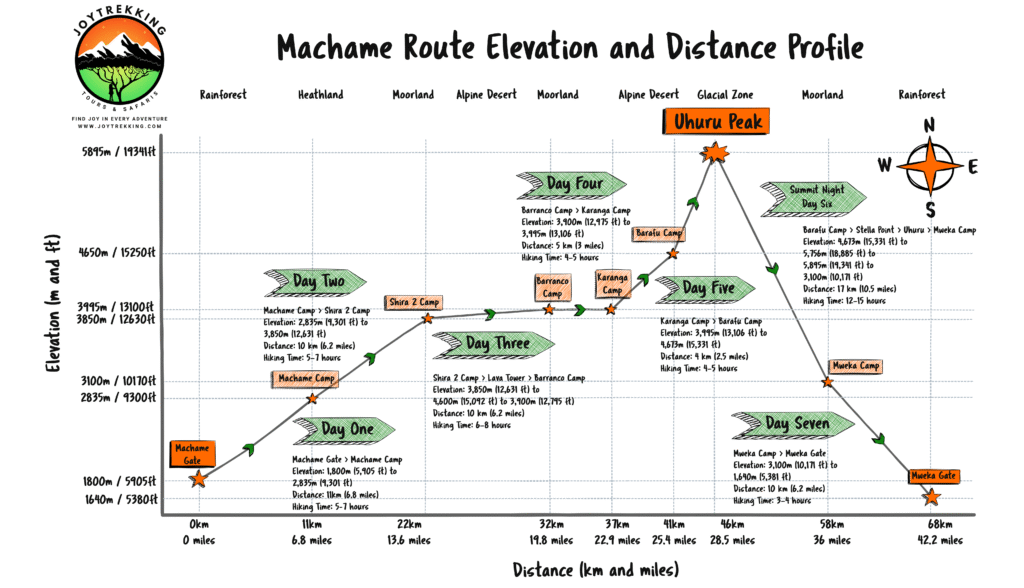
Highlights:
- Known as the “Whiskey Route” due to its challenging sections
- Passes through dramatic landscapes including the Barranco Wall
Advantages:
- Excellent scenery
- Good acclimatization opportunities
- High success rates on 7-day itineraries
However, it can be crowded during peak seasons.
3. Marangu Route – The Only Hut Route
The Marangu Route, often called the “Coca-Cola Route,” is the only trail with mountain huts instead of camping.
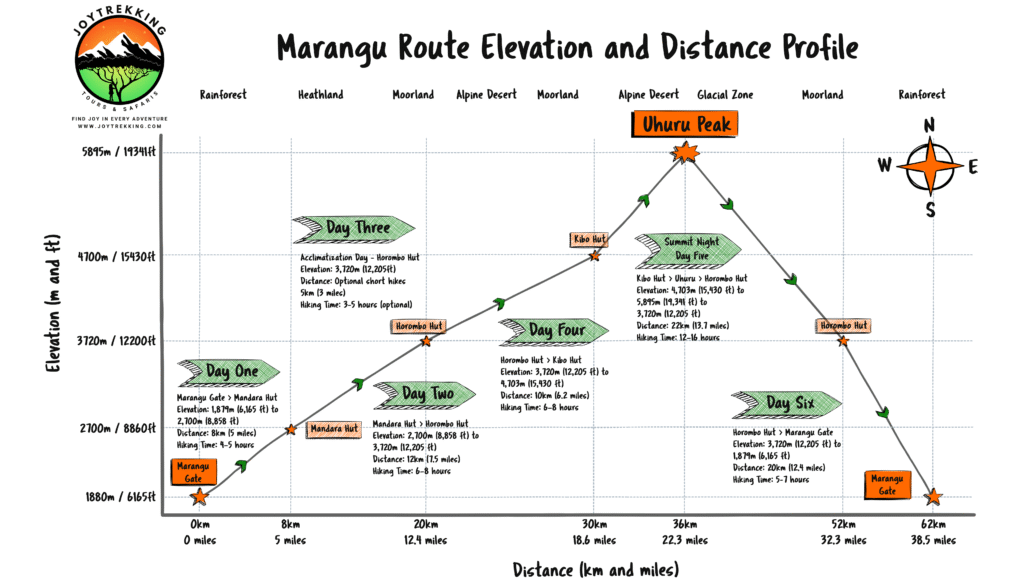
Advantages:
- Comfortable sleeping huts
- Shorter trekking duration
- Easier logistics
Disadvantages:
- Lower success rate due to shorter acclimatization time
- More crowded
Best for travelers who prefer basic lodge-style accommodation.
4. Rongai Route – The Quiet Northern Trail
Approaching Kilimanjaro from the north near the Kenyan border, the Rongai Route offers a quieter climbing experience.
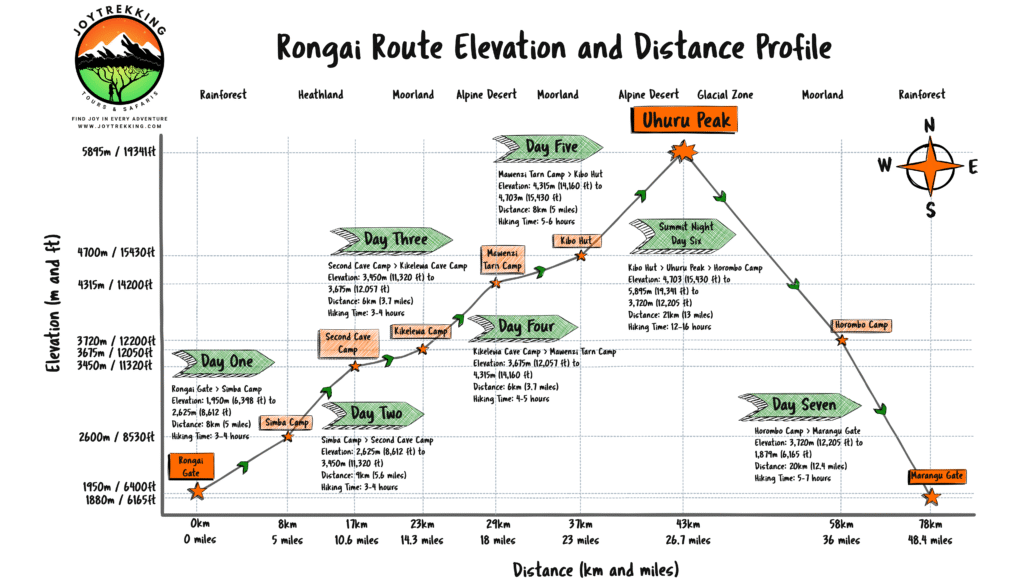
Advantages:
- Less crowded
- Drier conditions during rainy seasons
- Good wildlife viewing opportunities
It’s ideal for climbers who prefer remote trekking routes.
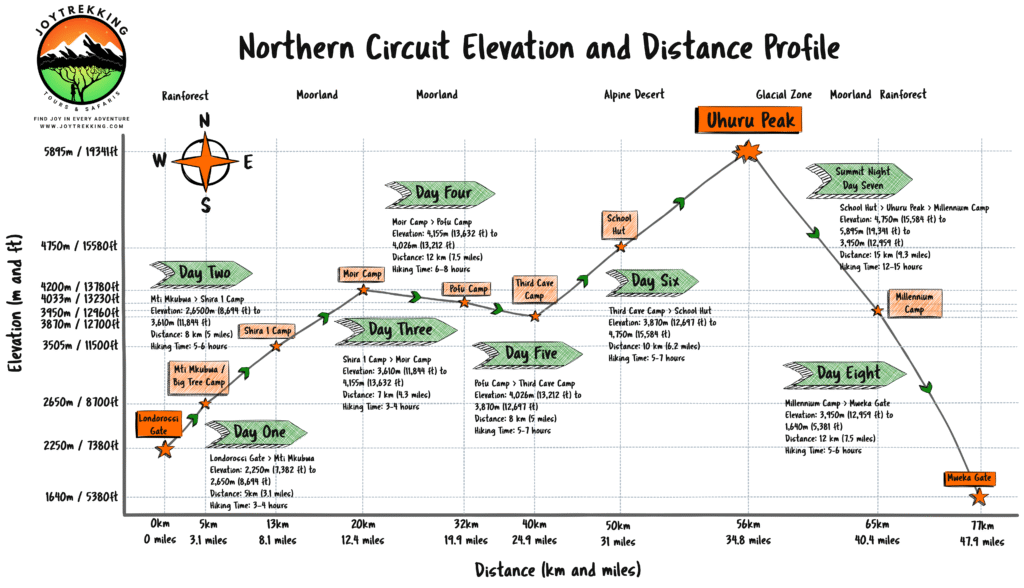
5. Northern Circuit Route – Highest Success Rate
The Northern Circuit Route is the longest Kilimanjaro route, providing the best acclimatization.
Advantages:
- Highest summit success rates
- Most panoramic views around the mountain
- Very low crowds
Because of its longer duration (8–9 days), it’s often recommended for first-time high-altitude climbers.
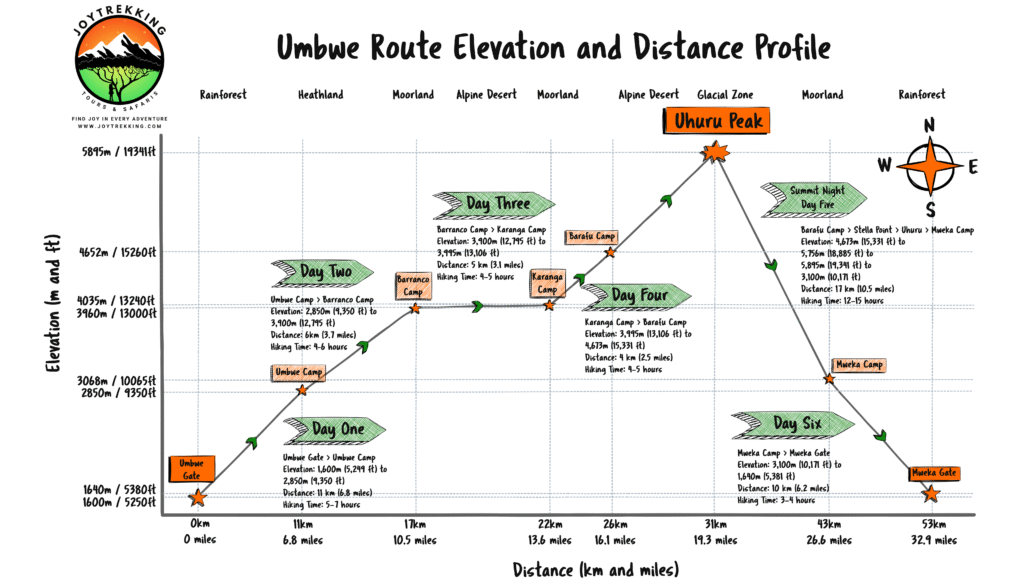
6. Umbwe Route – The Most Challenging Route
The Umbwe Route is the steepest and most direct route to the summit.
Advantages:
- Very quiet trail
- Dramatic and rugged scenery
Disadvantages:
- Rapid altitude gain
- Lower summit success rate
This route is best suited for experienced trekkers.
7. Shira Route – High Altitude Start
The Shira Route begins at a higher elevation on the Shira Plateau, offering spectacular views early in the climb.
However, starting high may increase the risk of altitude sickness for some climbers.
Local Expert Insights from JoyTrekking Tours & Safaris
As a locally operated Tanzanian company, JoyTrekking Tours & Safaris has guided climbers from more than 40 countries to the summit of Kilimanjaro.
Local guides recommend:
- Choosing 7–9 day itineraries for higher success rates
- Training with cardio and hiking practice before arrival
- Arriving in Arusha at least one day before the climb
Best acclimatization tip from our mountain guides:
“Pole pole” — which means slowly, slowly in Swahili. Walking slowly helps your body adjust to the altitude.
Customer Experience
Emily R., United Kingdom
“Climbing Kilimanjaro via the Lemosho Route with JoyTrekking Tours & Safaris was the best adventure of my life. The guides were incredibly professional and supportive all the way to the summit.”
Frequently Asked Questions
What is the easiest route to climb Kilimanjaro?
The Lemosho Route and Machame Route are often considered the easiest due to better acclimatization profiles.
Which Kilimanjaro route has the highest success rate?
The Northern Circuit Route has the highest summit success rate because of its longer acclimatization period.
How many days does it take to climb Kilimanjaro?
Most climbers take 6–9 days depending on the chosen route.
Do you need climbing experience to summit Kilimanjaro?
No technical climbing skills are required, but good physical fitness and proper acclimatization are essential.
Final Thoughts
Choosing the Best Routes for Climbing Kilimanjaro can make the difference between reaching the summit successfully or struggling with altitude challenges.
For most international travelers, Lemosho, Machame, and Northern Circuit routes provide the best balance of scenery, acclimatization, and success rates.
Whether you are a beginner or an experienced adventurer, climbing Mount Kilimanjaro is a life-changing journey that rewards you with breathtaking landscapes, cultural experiences, and the unforgettable moment of standing on the Roof of Africa.
About the Author
January Mziray
January Mziray is a Tanzanian tourism professional and mountain expert with years of experience guiding travelers across Mount Kilimanjaro and Tanzania’s national parks. As part of JoyTrekking Tours & Safaris, he specializes in helping international visitors plan safe, unforgettable climbing and safari adventures.
His insights combine local knowledge, trekking expertise, and sustainable tourism practices to ensure travelers enjoy authentic experiences in Tanzania.