More Time to Acclimatise
The longer itinerary creates opportunities to gain altitude progressively and include a climb-high, sleep-low acclimatisation day around Lava Tower.
Best Kilimanjaro tour operator
Best Kilimanjaro tour operator
Best Kilimanjaro tour operator
Discover 8-Day Kilimanjaro Climb via Lemosho Route one of the mountain's most scenic approaches. Cross the spectacular Shira Plateau, experience dramatic alpine landscapes and take on the challenge of reaching Uhuru Peak at 5,895 metres.
Rising above the plains of northern Tanzania, Mount Kilimanjaro is Africa's highest mountain and one of the world's most recognised trekking destinations. Its snow-capped summit, volcanic landscapes and changing natural environments make the climb an unforgettable adventure.
The mountain stands at 5,895 metres (19,341 feet). Unlike many high mountains, Kilimanjaro can be climbed without technical mountaineering equipment on its established trekking routes. However, reaching the summit is physically demanding because of the altitude, cold conditions and long trekking days.
The Lemosho Route approaches from the western side of the mountain. It is particularly appreciated for its quieter early trail, broad Shira Plateau scenery and gradual multi-day journey towards the summit.
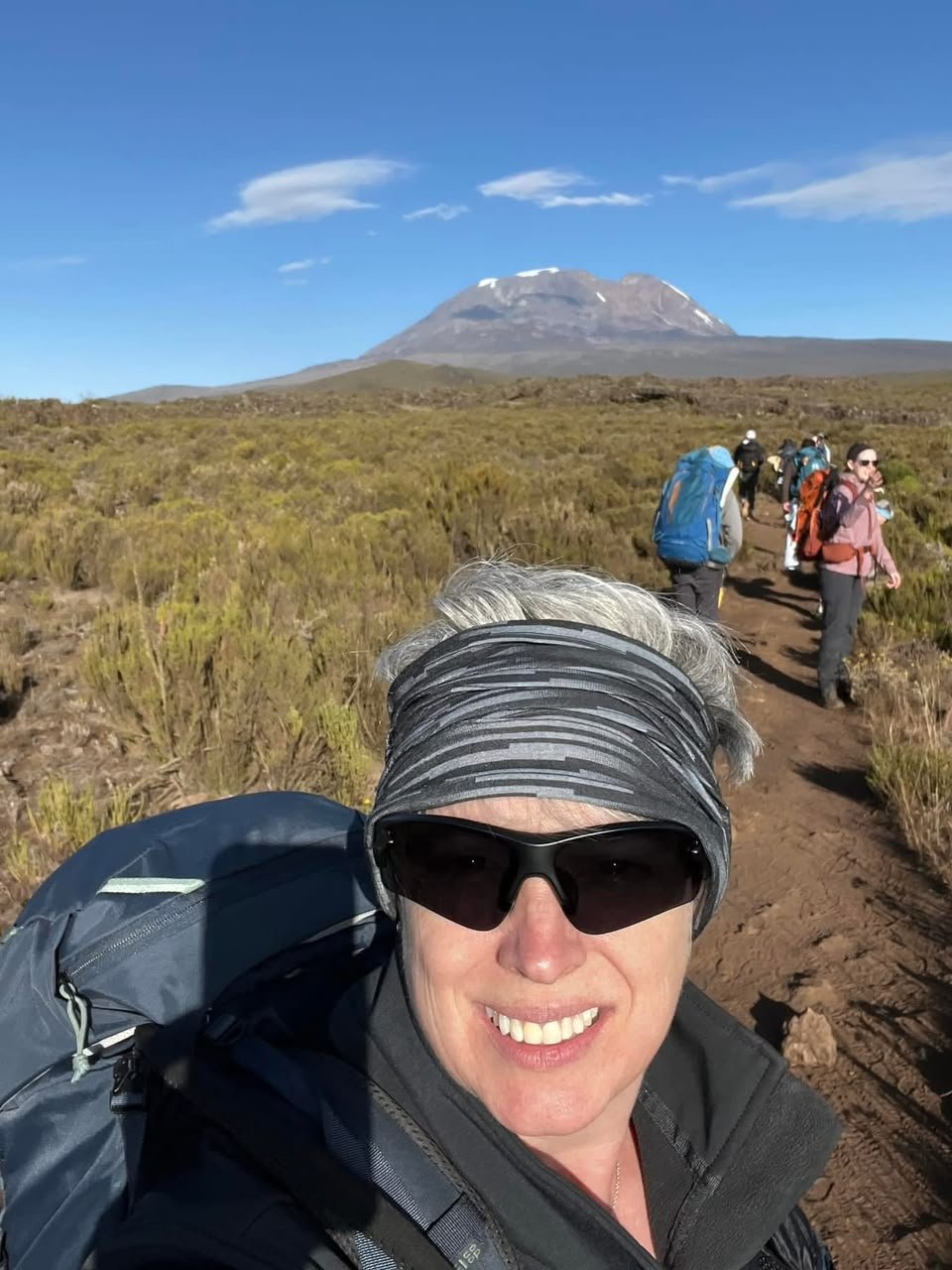
Eight days give you more time to experience the mountain and follow a more gradual trekking schedule than many shorter itineraries. The route combines remarkable scenery with important acclimatisation opportunities.
The longer itinerary creates opportunities to gain altitude progressively and include a climb-high, sleep-low acclimatisation day around Lava Tower.
Explore rainforest, open moorland, the Shira Plateau, dramatic volcanic formations and the alpine desert near the summit.
The Karanga Camp stop breaks up the approach to Barafu, helping make the final preparation day more manageable.
Begin on the quieter western side before crossing the Shira Plateau and joining the southern circuit.
Experience several environments, from humid forest to cold, exposed high-altitude terrain.
The final ascent towards Stella Point and Uhuru Peak is a demanding mountain experience and a remarkable personal achievement.
The Lemosho Route begins at the western side of Kilimanjaro, with access through the Londorossi Gate area. From there, the trail enters the montane rainforest before gradually climbing towards the Shira Plateau.
After crossing the plateau, the route approaches the southern side of Kibo, passes the Lava Tower area and descends to Barranco Camp. Trekkers then climb the Barranco Wall, continue to Karanga and Barafu, and make their summit attempt before descending through the Mweka Route.
Depending on the exact camp variation and trail configuration, the total trekking distance is approximately 56–70 km (35–43 miles).
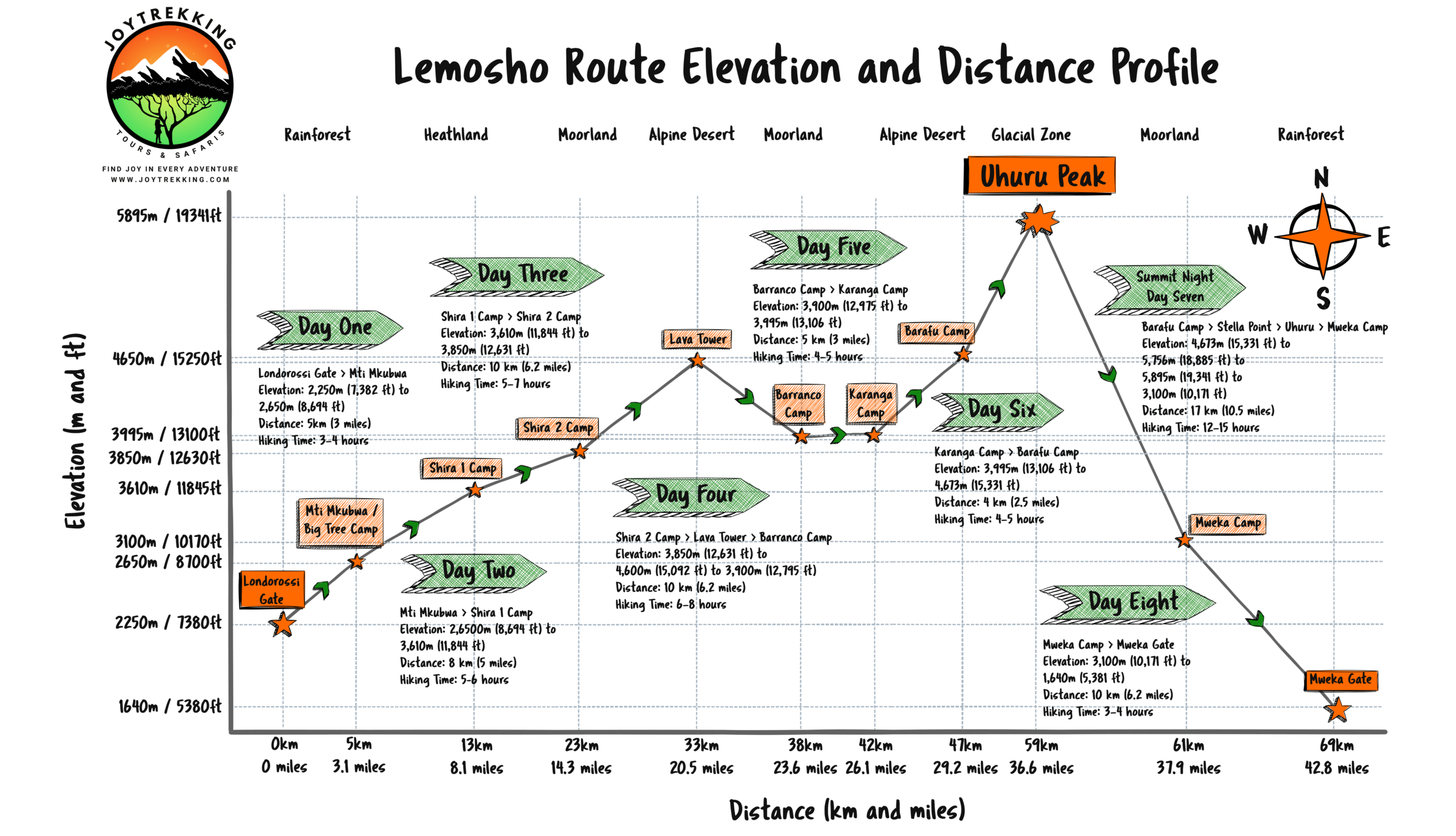
Follow the journey from the western rainforest to the summit of Africa's highest mountain. The schedule below is a representative 8-day itinerary; final camp selection and elevations should be confirmed in your trip quotation.
After a transfer from Moshi or Arusha, complete the park entry formalities and begin the trek through the lush rainforest. The trail is surrounded by tall trees, rich vegetation and the sounds of the forest. The first day is an introduction to the mountain environment and a chance to settle into the trekking rhythm.
Overnight: Mti Mkubwa Camp, approximately 2,650 m.
Leave the rainforest behind as the trail climbs into open moorland. Vegetation becomes shorter and the landscape opens towards the western side of Kilimanjaro. The day brings changing views and a noticeable increase in altitude.
Overnight: Shira 1 Camp, approximately 3,500–3,610 m.
Cross the remarkable Shira Plateau, one of the most scenic sections of the Lemosho Route. The terrain is more open, with wide views of Kibo and the surrounding volcanic landscape. Your guide will manage the pace and monitor how the group is responding to the increasing altitude.
The precise overnight location depends on the selected 8-day itinerary. Some variations use Shira 2, while others include Moir Hut as part of their acclimatisation plan.
Overnight: Shira 2 or Moir area, approximately 3,850–4,200 m.
This is an important acclimatisation day. The trail climbs towards the Lava Tower area, where you may reach approximately 4,640 m, before descending towards Barranco Valley.
This climb-high, sleep-low approach gives your body an opportunity to experience a higher elevation before spending the night lower at Barranco Camp. The landscape is rugged and dramatic, with impressive views of the mountain.
Overnight: Barranco Camp, approximately 3,976 m.
Begin with the famous Barranco Wall. Although it looks intimidating from camp, it is a non-technical scrambling section when completed carefully with your guide. Take your time, follow instructions and use your hands where necessary.
Beyond the wall, the trail crosses a series of ridges and valleys before reaching Karanga Camp. This shorter stage helps divide the journey towards the final high camp.
Overnight: Karanga Camp, approximately 3,995–4,000 m.
Continue through the alpine desert towards Barafu Camp, your principal summit base camp. The terrain is increasingly rocky and exposed, and the air becomes thinner as you climb.
On arrival, rest, eat, hydrate and prepare your summit clothing and equipment. Your guide will explain the summit-night plan. An early dinner and rest are important because the summit attempt usually begins around midnight.
Overnight: Barafu Camp, approximately 4,660–4,673 m. Some itinerary variations use a different high camp.
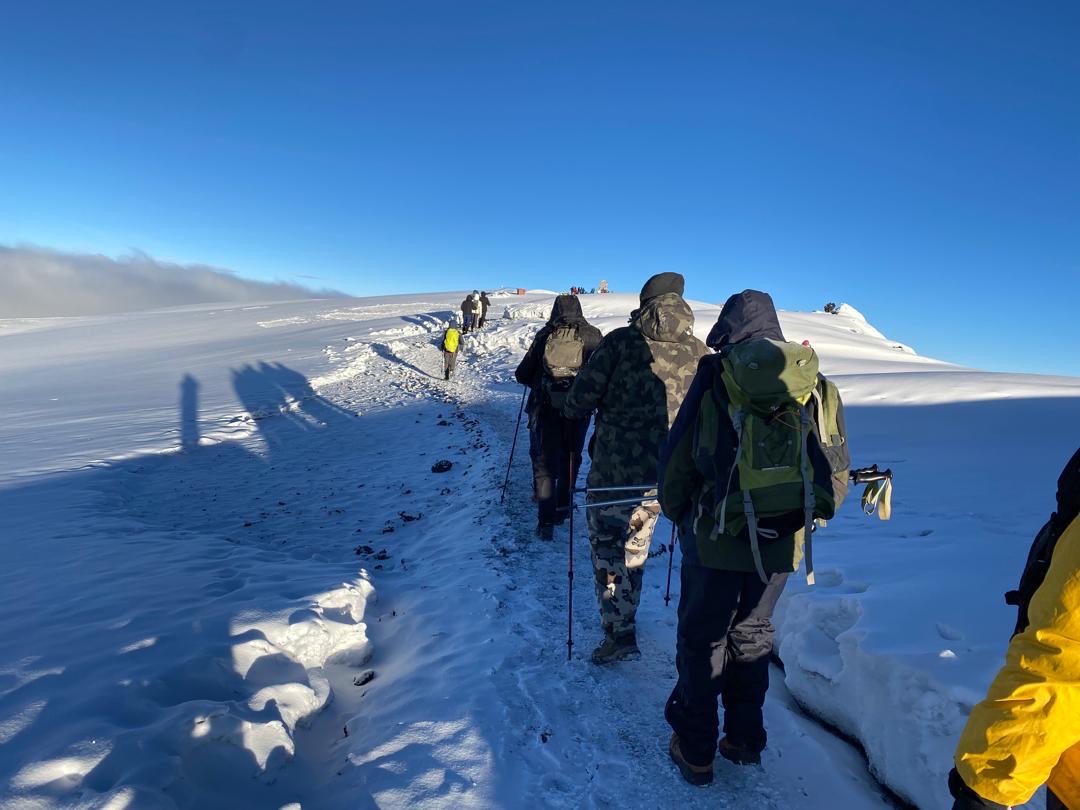
The summit attempt usually starts around midnight. Trek slowly through the cold and darkness towards Stella Point on the crater rim. From there, continue along the rim towards Uhuru Peak, the highest point in Africa.
If conditions and your health allow, reaching Uhuru Peak at sunrise is an unforgettable moment. After photographs and a short celebration, descend carefully towards Barafu and continue down to Mweka Camp.
This is an exceptionally demanding day. Your guide may change the plan or stop the ascent if safety requires it.
Overnight: Mweka Camp, approximately 3,090 m.
Complete the final descent through the rainforest to Mweka Gate. After completing the park exit procedures, eligible climbers receive their summit certificates. Your vehicle will transfer you back to your hotel in Moshi or Arusha.
Enjoy a well-earned shower, a comfortable bed and time to reflect on your Kilimanjaro experience.
End of climb: Mweka Gate, approximately 1,640 m.
Understanding overnight elevations helps you appreciate how the route gains height and why acclimatisation is such an important part of a Kilimanjaro climb.
| Stage | Location | Approx. Elevation | Purpose |
|---|---|---|---|
| Day 1 | Mti Mkubwa Camp | 2,650 m | Rainforest approach |
| Day 2 | Shira 1 Camp | 3,500–3,610 m | Enter Shira Plateau |
| Day 3 | Shira 2 / Moir area | 3,850–4,200 m | High plateau trekking |
| Day 4 | Lava Tower (high point) | ~4,640 m | Climb high, sleep low |
| Day 4 | Barranco Camp | ~3,976 m | Acclimatisation overnight |
| Day 5 | Karanga Camp | ~3,995–4,000 m | Prepare for high camp |
| Day 6 | Barafu Camp | ~4,660–4,673 m | Summit base camp |
| Day 7 | Uhuru Peak | 5,895 m | Highest point in Africa |
| Day 7 | Mweka Camp | ~3,090 m | Descent and recovery |
| Day 8 | Mweka Gate | ~1,640 m | Finish the expedition |
Elevations are approximate. The Day 3 camp and exact route profile depend on the confirmed Lemosho itinerary. These figures are planning guidance, not a substitute for the operator's final route sheet.
At high altitude, the air contains less available oxygen pressure. Your body needs time to adapt. Altitude-related illness can affect anyone, including experienced hikers and very fit athletes.
The Lemosho Route's longer schedule provides more time on the mountain and includes a climb-high, sleep-low day around Lava Tower. This is one reason many trekkers consider an eight-day itinerary when planning their climb.
The cost of climbing Kilimanjaro depends on the group size, travel season, accommodation before and after the climb, operator services and the standard of mountain support.
Indicative planning range per person.
Indicative planning range per person.
Indicative upper planning range per person.
Always request a written list of inclusions and exclusions. The details can vary between operators and package levels.
Kilimanjaro can be climbed throughout the year, but weather conditions change considerably between seasons and across the mountain's different climate zones.
This is one of the popular climbing windows. Conditions are often favourable, although clouds, rain and snow can still occur.
Another popular period, generally associated with drier conditions and good opportunities for mountain views. July, August and September can be busy.
These periods can bring wetter conditions. Trails may become muddy and visibility can change. Climbs may still operate, depending on weather, route conditions and operator assessment.
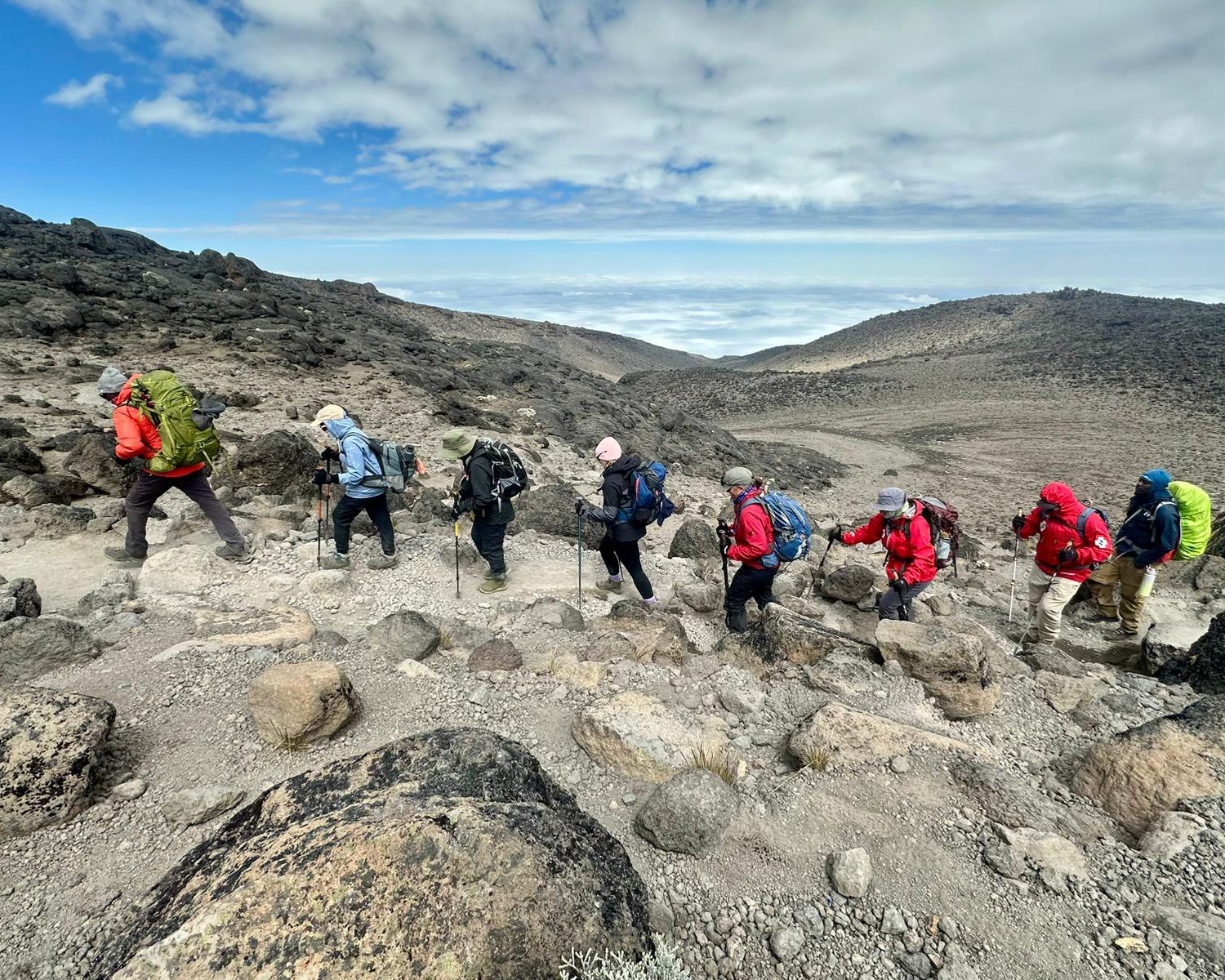
You do not need to be an elite athlete, but you should prepare for several consecutive days of walking, steep trails, cold nights and a long summit attempt.
Include regular walking, hiking, stair climbing and longer weekend walks. Increase distance gradually before your trip.
Practise walking with a light daypack and use the boots and socks you plan to wear on the mountain.
Practise using your thermal layers, insulated jacket, gloves, hat and waterproof outerwear.
Confirm the operator's equipment list and luggage weight limits before travelling. Some equipment may be available for rental.
Every Kilimanjaro expedition depends on a mountain crew. Guides, assistant guides, cooks and porters work together to support trekkers throughout the journey.
Responsible trekking means asking how crew members are paid, what loads they carry, whether they have suitable clothing and sleeping arrangements, and how tips are distributed.
Before booking, ask your operator for a clear explanation of its porter welfare practices, crew numbers and tipping procedures. Responsible travel should recognise the people behind the experience, not only the summit photograph.
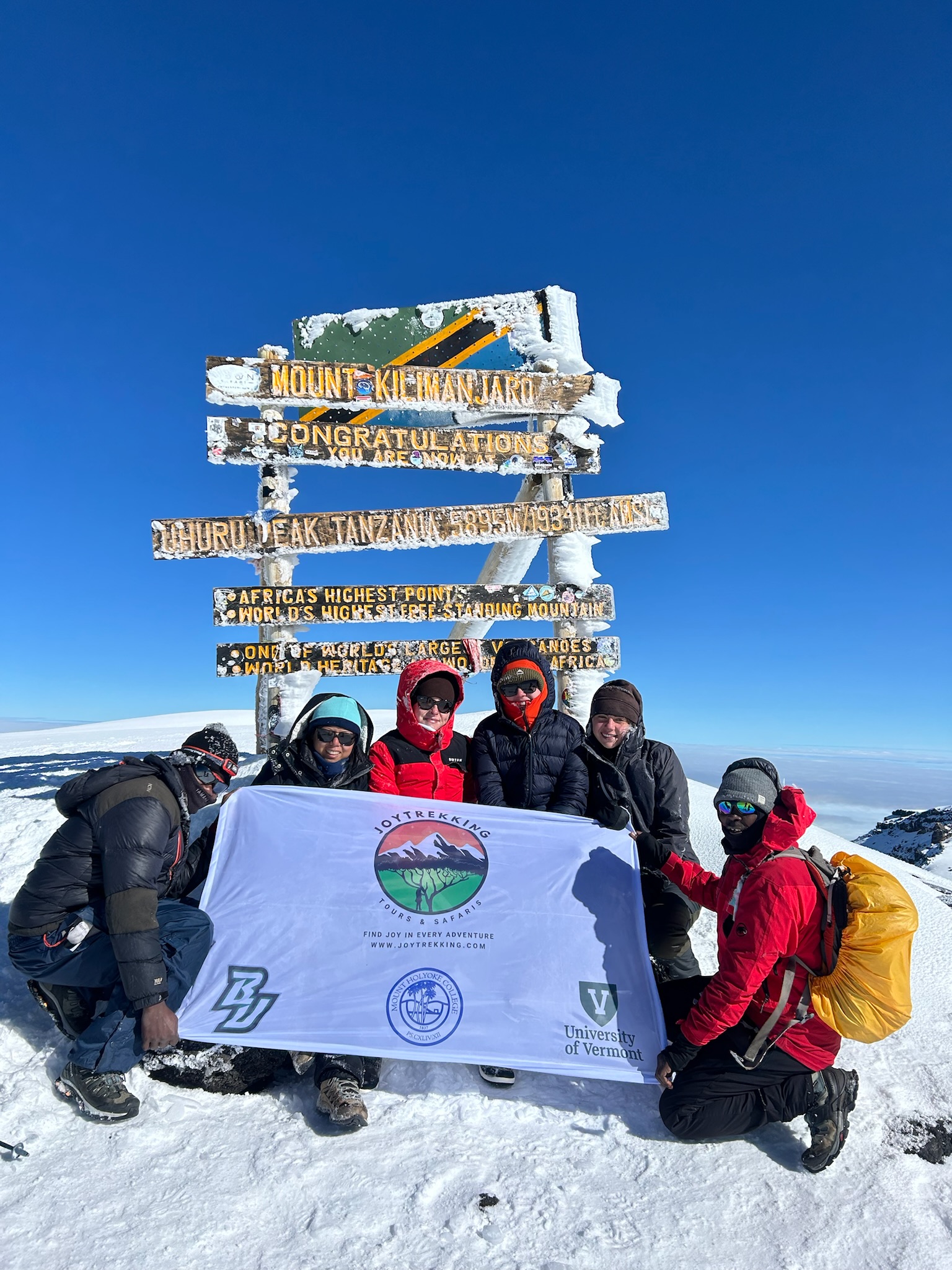
Your mountain journey should begin with clear information and a well-planned itinerary. Contact JoyTrekking Tours & Safaris to discuss your preferred dates, group size, accommodation arrangements and the services you need.
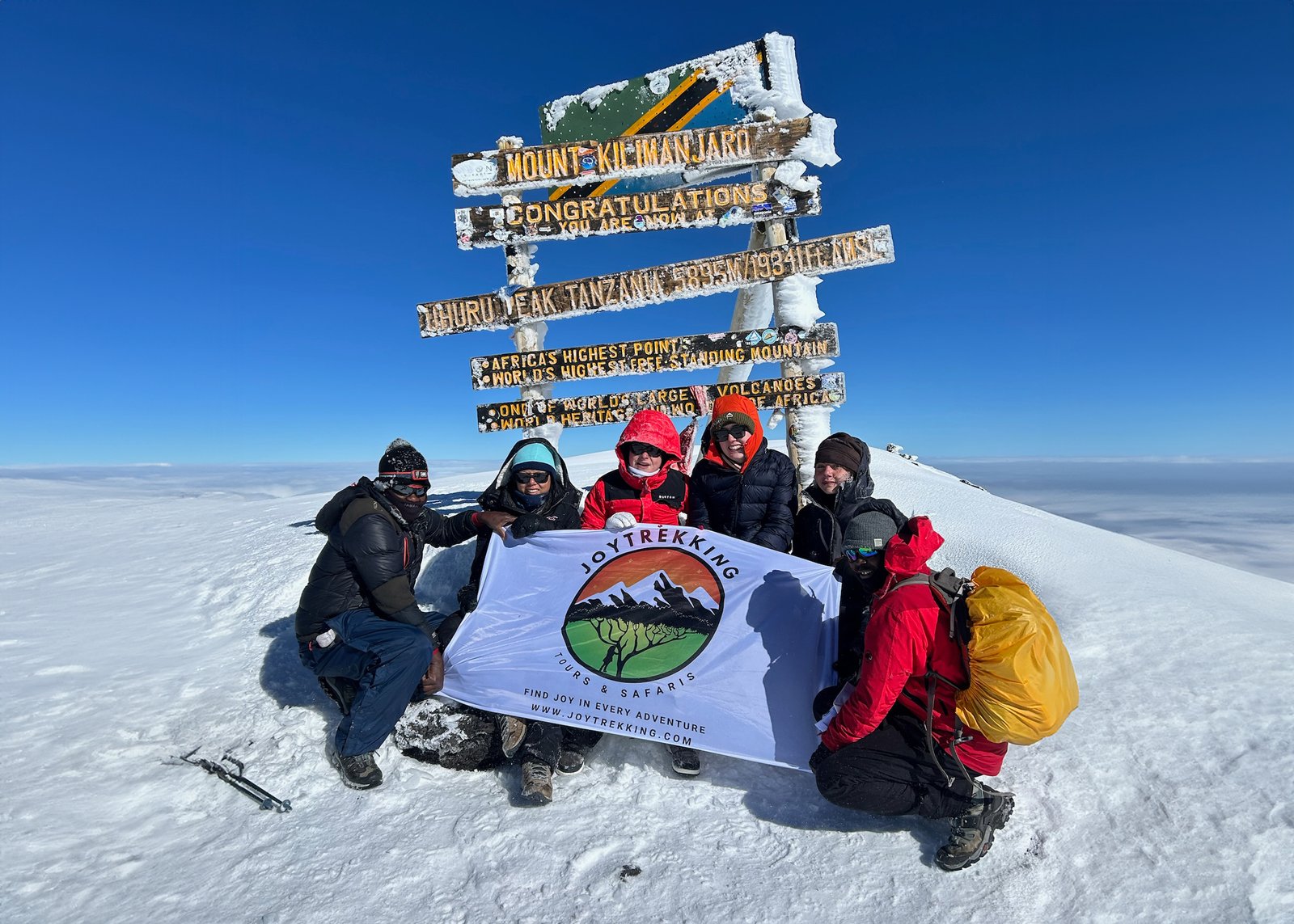
Discuss Lemosho and other Kilimanjaro route options, preparation, group departures and private climb arrangements.
Enquire About Trekking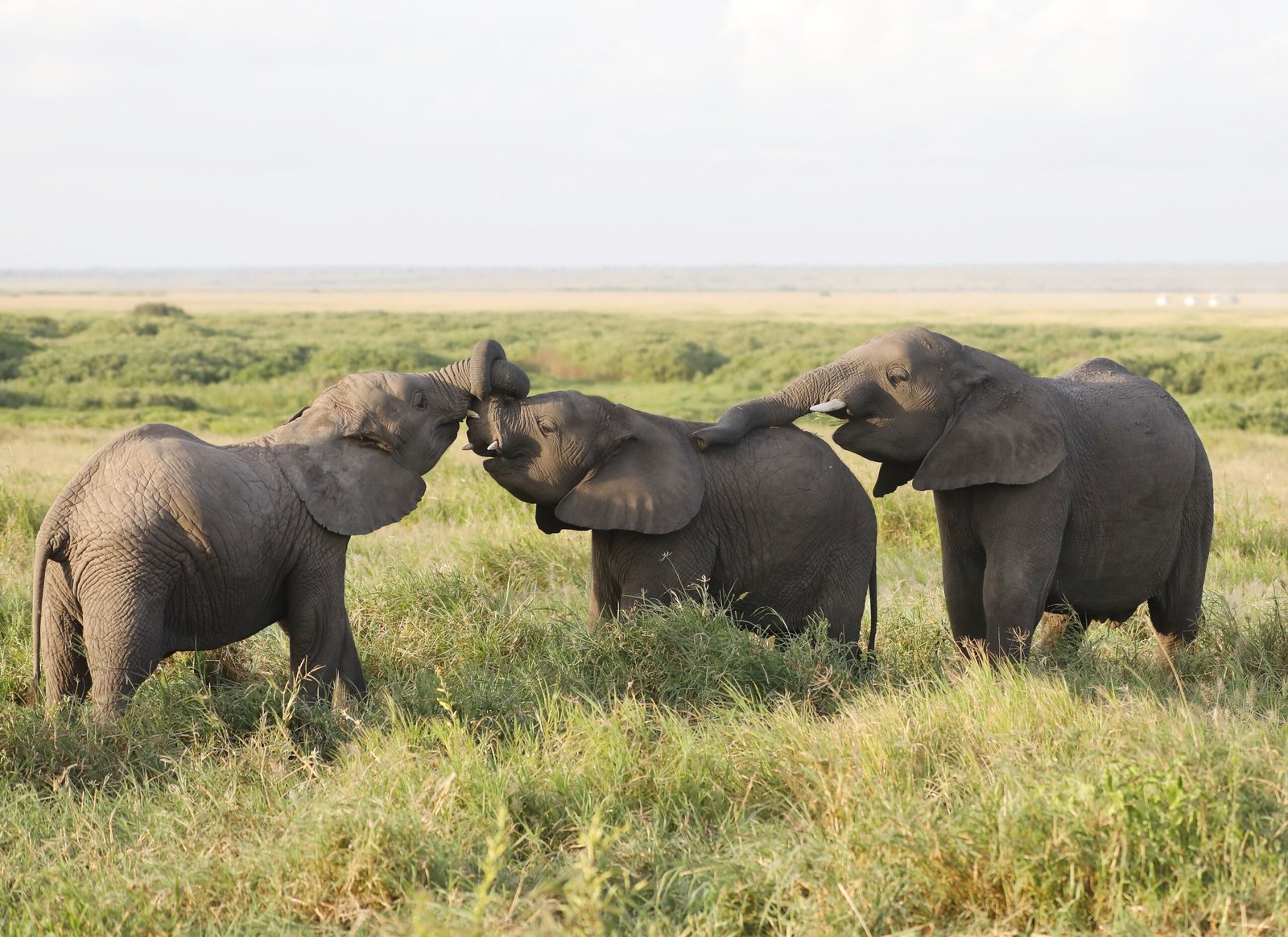
Extend your Tanzania holiday with a wildlife safari to destinations such as Serengeti, Ngorongoro, Tarangire and Lake Manyara.
Explore Safari Packages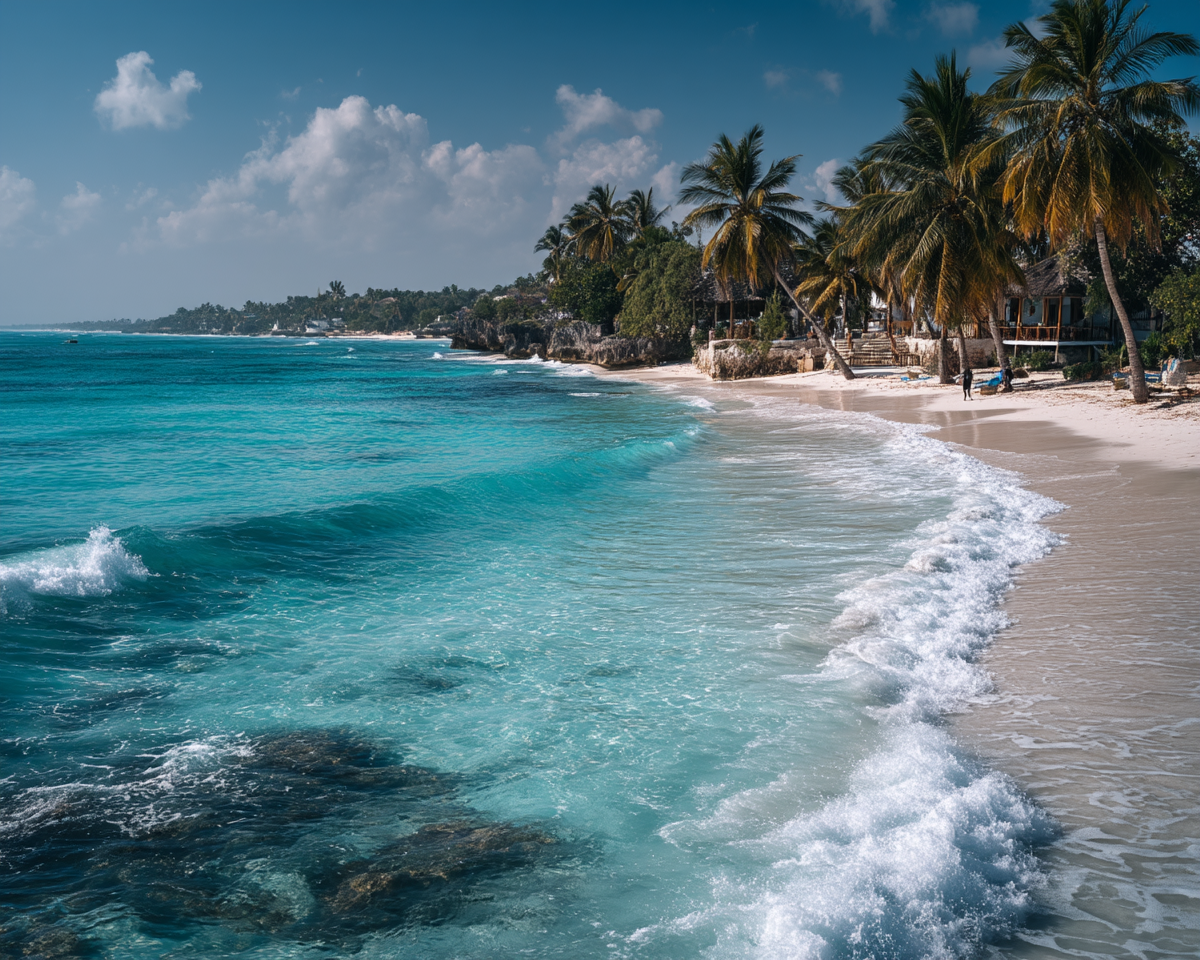
Finish your adventure with Indian Ocean beaches, island experiences, relaxation and cultural discovery in Zanzibar.
Explore Zanzibar HolidaysAn eight-day mountain expedition can be the centrepiece of a longer Tanzania holiday. Depending on your available time, you can add wildlife viewing or a relaxing beach stay.
After descending from Kilimanjaro and allowing time to recover, continue to Tanzania's famous northern safari circuit. You may explore Tarangire National Park, the Serengeti and Ngorongoro Conservation Area.
Safari duration can be tailored to your time and budget. Wildlife sightings depend on natural conditions and cannot be guaranteed.
View combo Packages →After the physical challenge of the mountain, Zanzibar offers a very different side of Tanzania. Enjoy time by the Indian Ocean, discover Stone Town, explore local culture or simply relax at the beach.
Your beach extension can be planned around your international departure date and preferred hotel category.
Discover combo Package →Choosing a tour operator is an important decision. Read independent guest feedback and reviews to learn about other travellers' experiences with JoyTrekking Tours & Safaris.
Visit JoyTrekking's review profile to explore available customer feedback. We encourage travellers to read the original reviews and make an informed decision.
Read JoyTrekking Reviews →Reviews and ratings are displayed on the independent review profile. This article does not reproduce or invent customer testimonials.
Helpful answers for international travellers planning a Mount Kilimanjaro expedition in Tanzania.
It can be a suitable option for first-time Kilimanjaro trekkers who are physically prepared and understand the demands of high altitude. Previous mountain experience is helpful but does not guarantee summit success. A medical consultation and proper preparation are recommended.
It is a challenging high-altitude trek. The walking is generally non-technical, but long days, steep sections, cold temperatures and reduced oxygen availability make the expedition demanding.
The route is approximately 56–70 kilometres (35–43 miles), depending on the selected camp variation and final route itinerary.
Uhuru Peak is the highest point on Mount Kilimanjaro at 5,895 metres (19,341 feet) above sea level.
Many eight-day Lemosho itineraries include the Lava Tower area as part of a climb-high, sleep-low acclimatisation day before descending to Barranco Camp. Confirm the exact route variation with your operator.
January to early March and June to October are commonly preferred climbing windows. Weather is variable, however, and conditions cannot be guaranteed.
A planning estimate is approximately US$2,400–US$3,600 or more per person, depending on the operator, group size, season and services. Ask for a written quotation and detailed inclusions.
Yes. Arrange insurance that explicitly covers high-altitude trekking to at least 5,895 metres, emergency medical treatment, evacuation and repatriation. Check the policy wording before purchasing it.
Yes. Many travellers add a northern circuit safari after their climb. The length and destinations can be tailored to your available holiday time.
Yes. Zanzibar is a popular beach extension for travellers who want to relax after their mountain expedition. Allow enough recovery time and plan your flight connections carefully.
No. Summit success cannot be guaranteed. Altitude illness, weather, physical condition and other mountain conditions can affect the outcome. The guide's safety decision must always take priority over reaching the summit.
Use these resources to learn more about the mountain, park access, climbing conditions and responsible trekking practices.
Tell us when you would like to travel, whether you prefer a group or private climb, and what kind of experience you are looking for. JoyTrekking Tours & Safaris can help you discuss your Lemosho expedition and plan the next steps of your Tanzania holiday.