Discover expert How to Prepare Mentally for Kilimanjaro Trek . Learn proven mindset techniques, psychological tips, and trekking confidence strategies from JoyTrekking Tours & Safaris to help international travellers succeed on Africa’s highest peak.
Excerpt
Climbing Mount Kilimanjaro is not just a physical challenge it is a mental journey. This guide explains how to prepare mentally for Kilimanjaro trek using proven psychological strategies, expert insights, and real expedition experience from JoyTrekking Tours & Safaris in Tanzania.
Quick Summary / Answers
Mental strength is as important as physical fitness on Kilimanjaro
Altitude, fatigue and weather are major psychological challenges
Proper mindset training increases summit success rates
Visualization, pacing and positive self-talk are essential tools
Guided support from professional operators improves mental resilience
Preparation should start at least 6–12 weeks before trekking
How to Prepare Mentally for Kilimanjaro Trek
Climbing Mount Kilimanjaro is one of the most rewarding adventures in the world, but it is also one of the most mentally demanding. Standing at 5,895 meters above sea level, Kilimanjaro challenges not only your body but also your emotional resilience, patience, and determination.
At JoyTrekking Tours & Safaris, we have guided hundreds of international travellers to Uhuru Peak, and one truth remains consistent: those who succeed are not always the strongest, but the most mentally prepared.
This guide explores how to prepare mentally for Kilimanjaro trek using expert strategies designed for international travellers who want to experience safe, successful, and memorable summit journeys in Tanzania.
Understanding the Mental Challenge of Kilimanjaro
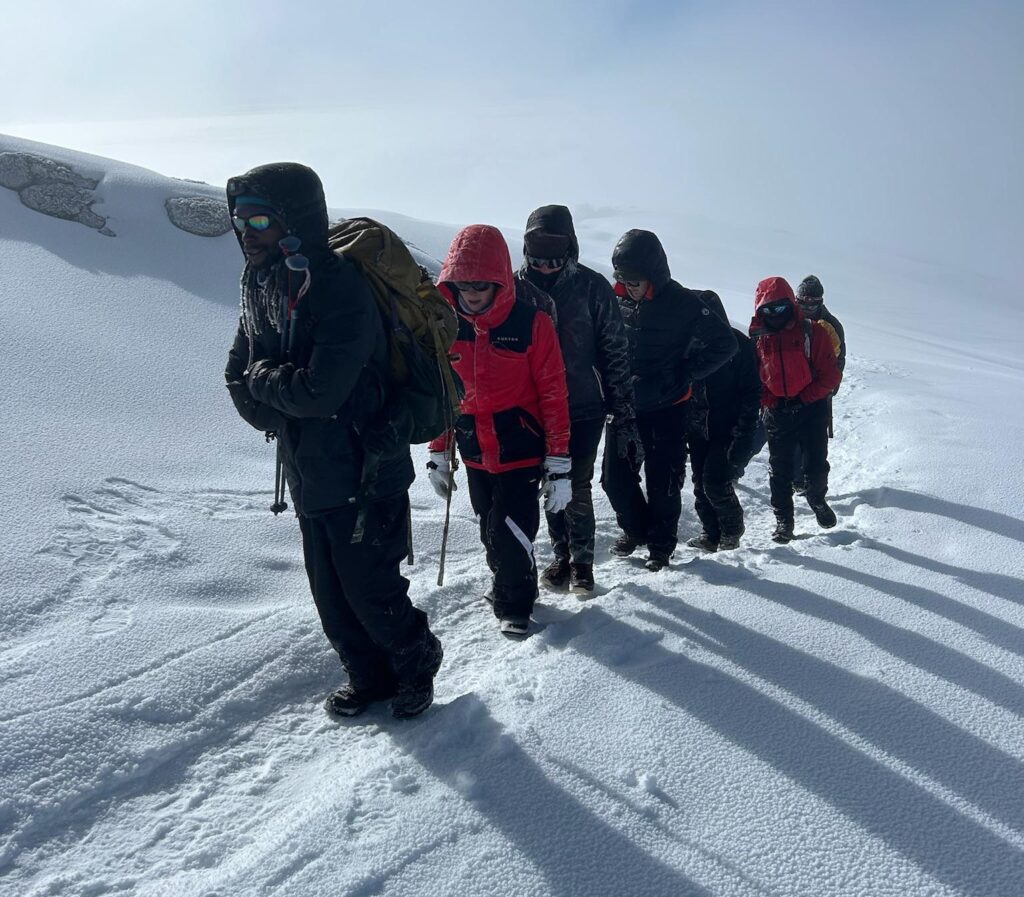
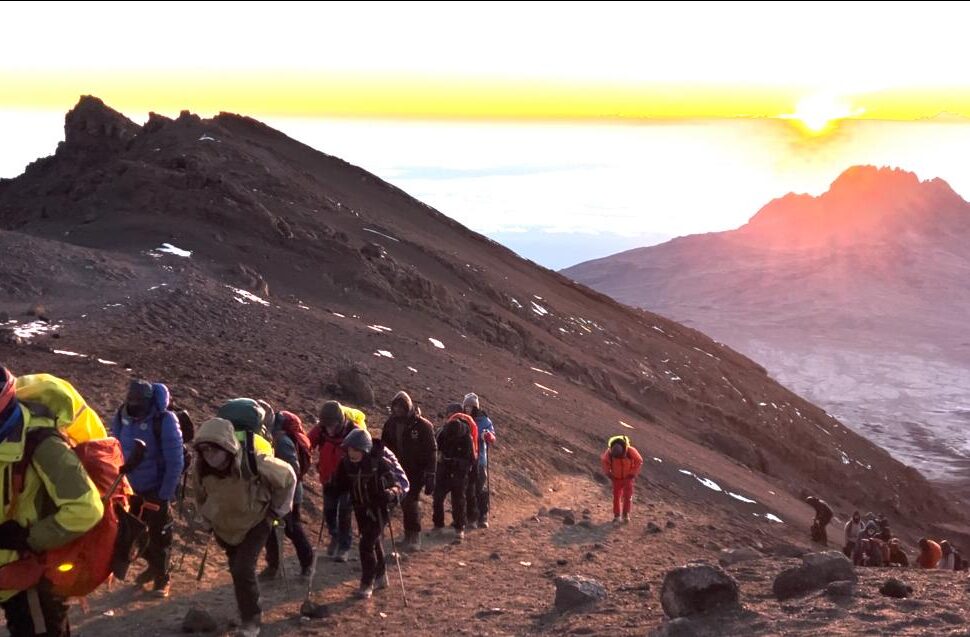
International climbers trekking through the snow near Uhuru Peak on Mount Kilimanjaro, demonstrating the mental strength and determination needed for a successful summit in Tanzania.
Before learning how to prepare mentally for Kilimanjaro trek, it is important to understand what makes it mentally difficult.
Unlike technical mountains, Kilimanjaro does not require climbing skills. However, it presents psychological challenges such as:
Long trekking hours (5–10 hours daily)
Cold temperatures at night
Altitude sickness symptoms
Slow pace (pole pole philosophy)
Reduced oxygen levels near the summit
Sleep disruption in tents
Repetitive trekking scenery
These conditions often lead to doubt, frustration, and fatigue.
Why Mental Strength Matters More Than Physical Fitness
Many climbers underestimate altitude effects in Mount Kilimanjaro. Even very fit individuals can struggle mentally when:
Breathing becomes difficult
Headaches develop
Energy levels drop suddenly
Summit night feels endless
Mental preparation helps you stay calm, accept discomfort, and keep moving forward.
The Psychology of High-Altitude Trekking
High-altitude trekking is a psychological endurance game. The brain reacts to reduced oxygen by increasing fatigue perception and slowing decision-making.
Common Psychological Reactions:
Irritability and mood swings
Loss of motivation
Anxiety before summit night
Doubt about reaching the top
Emotional exhaustion
Understanding these reactions helps you normalize them instead of fearing them.
Accepting “Slow Progress” Mindset
One of the most important mental lessons in Kilimanjaro is embracing the Swahili trekking philosophy: “Pole Pole” (slowly, slowly).
Trying to rush increases fatigue and altitude stress.
Key mindset shift:
Instead of thinking:
“I’m going too slow”
Think:
“Slow is the strategy for success”
Proven Mental Preparation Strategies
Below are expert-tested methods used by successful climbers guided by JoyTrekking Tours & Safaris
1. Visualization Training
Before your trek, spend 10–15 minutes daily imagining yourself:
Walking through rainforest zones
Reaching alpine desert landscapes
Standing at Uhuru Peak
Feeling exhausted but victorious
Visualization prepares your brain to accept the journey as familiar.
2. Mental Rehearsal of Hard Moments
Do not only imagine success also prepare for difficulty:
Cold summit night
Headaches at high altitude
Slow walking pace
Mentally rehearse how you will respond calmly instead of panicking.
3. Breaking the Journey into Small Goals
Instead of thinking of the full summit, break it into:
Next 30 minutes of walking
Next checkpoint
Next meal stop
This reduces mental overload and increases endurance.
4. Controlled Breathing Techniques
Breathing is your strongest mental tool at altitude.
Try:
Deep inhale for 4 seconds
Hold for 2 seconds
Exhale for 6 seconds
This reduces anxiety and improves oxygen efficiency.
5. Positive Self-Talk
Replace negative thoughts with empowering statements:
“I can take one more step”
“This discomfort is temporary”
“I am capable of reaching the summit”
Self-talk directly affects endurance.
Mental Preparation Timeline (Before the Trek)
Time Before Trek
Focus Area
Mental Goal
12 weeks
Fitness + awareness
Build confidence
8 weeks
Hiking practice
Build discipline
6 weeks
Visualization
Mental adaptation
4 weeks
Gear familiarity
Reduce uncertainty
2 weeks
Relaxation
Reduce anxiety
1 week
Mindset focus
Stay calm & ready
Dealing with Altitude Psychology on Kilimanjaro
At higher altitude zones of Mount Kilimanjaro, your mind may feel more tired than your body.
Common thoughts:
“I can’t continue”
“I should turn back”
“This is too hard”
What guides recommend:
Pause, breathe, and rest
Drink water regularly
Focus on steps, not distance
Trust your guide’s pacing
Professional operators like JoyTrekking Tours & Safaris are trained to monitor both physical and psychological conditions.
Role of Guides in Mental Success
A major factor in mental preparation is having experienced guides.
Guides help by:
Encouraging climbers during difficult moments
Setting safe walking pace
Monitoring altitude sickness
Providing motivation at summit night
Offering psychological reassurance
This is why guided trekking in Tanzania significantly increases summit success rates.
Emotional Stages of Kilimanjaro Trek
Most climbers experience emotional phases:
Stage 1: Excitement
High energy
Overconfidence
Stage 2: Adjustment
Fatigue begins
Reality sets in
Stage 3: Challenge
Mental doubt
Physical discomfort
Stage 4: Acceptance
Focus improves
Rhythm stabilizes
Stage 5: Summit Determination
Strong emotional drive
Final push mindset
Understanding these stages helps normalize your experience.
Mental Mistakes to Avoid
When learning how to prepare mentally for Kilimanjaro trek, it is just as important to understand what not to do as it is to understand the right strategies. Many climbers who struggle on Mount Kilimanjaro are not necessarily unfit or unprepared physically they are often affected by avoidable mental mistakes that increase stress, reduce confidence, and make the journey feel harder than it actually is. Recognizing these patterns early helps you stay calm, focused, and emotionally stable throughout the trek.
Overthinking Altitude Symptoms
One of the most common mental mistakes during a Kilimanjaro climb is overanalyzing every small change in how your body feels. Mild headaches, fatigue, or reduced appetite are normal reactions to altitude, but many climbers panic and assume the worst. This overthinking creates unnecessary anxiety, which can actually worsen the symptoms.
Instead of worrying excessively, it is better to stay calm, follow your guide’s instructions, drink enough water, and focus on steady progress. Understanding how to prepare mentally for Kilimanjaro trek includes accepting that some discomfort is normal and manageable.
Comparing Yourself with Others
Another major mistake is comparing your pace, strength or energy levels with fellow climbers. On Kilimanjaro, every individual has a different adaptation rate to altitude. Some may walk faster, while others take more frequent breaks. Comparing yourself only leads to self-doubt and unnecessary pressure.
The correct mindset is to focus on your own rhythm. The success of your climb depends on consistency, not competition. Part of how to prepare mentally for Kilimanjaro trek is learning to trust your personal journey rather than measuring it against others.
Why Kilimanjaro Is a Life-Changing Mental Journey
Climbing Mount Kilimanjaro is more than tourism it is transformation.
You learn:
Patience under pressure
Resilience in discomfort
Confidence in uncertainty
Appreciation of nature
Mental discipline
It is one of the few experiences where mindset determines success more than strength.
These sources provide verified information about conservation, geography and tourism guidelines.
Frequently Asked Questions (FAQs)
1. Is Kilimanjaro mentally harder than physically?
Yes. Many climbers find mental endurance more challenging than physical fitness due to altitude and fatigue.
How do I avoid panic during the climb?
Focus on breathing, trust your guide, and break the climb into small steps.
What is the biggest mental challenge on Kilimanjaro?
Summit night, due to cold, exhaustion, and darkness.
Can beginners successfully reach the summit?
Yes. With proper mental preparation and guided support, beginners successfully reach Uhuru Peak every year.
How early should I start mental preparation?
At least 6–12 weeks before your trek.
Final Thoughts
Learning how to prepare mentally for Kilimanjaro trek is the true foundation of a successful summit experience on Mount Kilimanjaro. While many international travellers naturally focus on physical training such as cardio workouts, hiking practice and strength conditioning it is the mental dimension that ultimately determines whether a climber continues pushing forward during the most difficult moments or chooses to stop short of the summit. Physical fitness may carry you to the mountain, but it is mental preparation that carries you through the altitude, fatigue, cold nights, and emotional tests that define high-altitude trekking.
In reality, the journey up Kilimanjaro is not a steady climb of strength it is a fluctuating experience of comfort, discomfort, motivation, doubt and renewed determination. At different points of the trek, especially during summit night, your body will feel exhausted and your mind will question your decision. This is exactly where understanding how to prepare mentally for Kilimanjaro trek becomes essential. Climbers who succeed are those who have already trained their minds to accept discomfort as temporary, to trust the process and to focus only on the next small step rather than the entire distance ahead.
With the right mindset, proper guidance from experienced professionals, and consistent mental preparation before departure, your journey to Mount Kilimanjaro becomes far more than a physical achievement. It transforms into a deeply personal experience of resilience, patience, and self-discovery. Many travellers return from the mountain not only with the pride of standing at Uhuru Peak but also with a stronger sense of mental clarity and confidence that stays with them long after the trek is over.
What Our Customer Say
Madeline Wayne2024.12.20
Loved January, Ely, Christian, Filbert, Emmanuel, Elias, and the whole crew. Excellent trip led by excellent people. Whole-heartedly recommend this local company with local guides and porters.
Ready to experience Kilimanjaro with expert guidance?
Join JoyTrekking Tours & Safaris for a professionally guided, safe, and life-changing trekking adventure in Tanzania. Our experienced team ensures both your physical and mental readiness for the summit.
January Mziray is a professional Tanzanian safari and trekking expert affiliated with JoyTrekking Tours & Safaris. With years of experience guiding international travellers across Tanzania, he specializes in Kilimanjaro expeditions, cultural tourism and adventure travel storytelling. His insights are based on real expedition experience and field expertise on Mount Kilimanjaro.