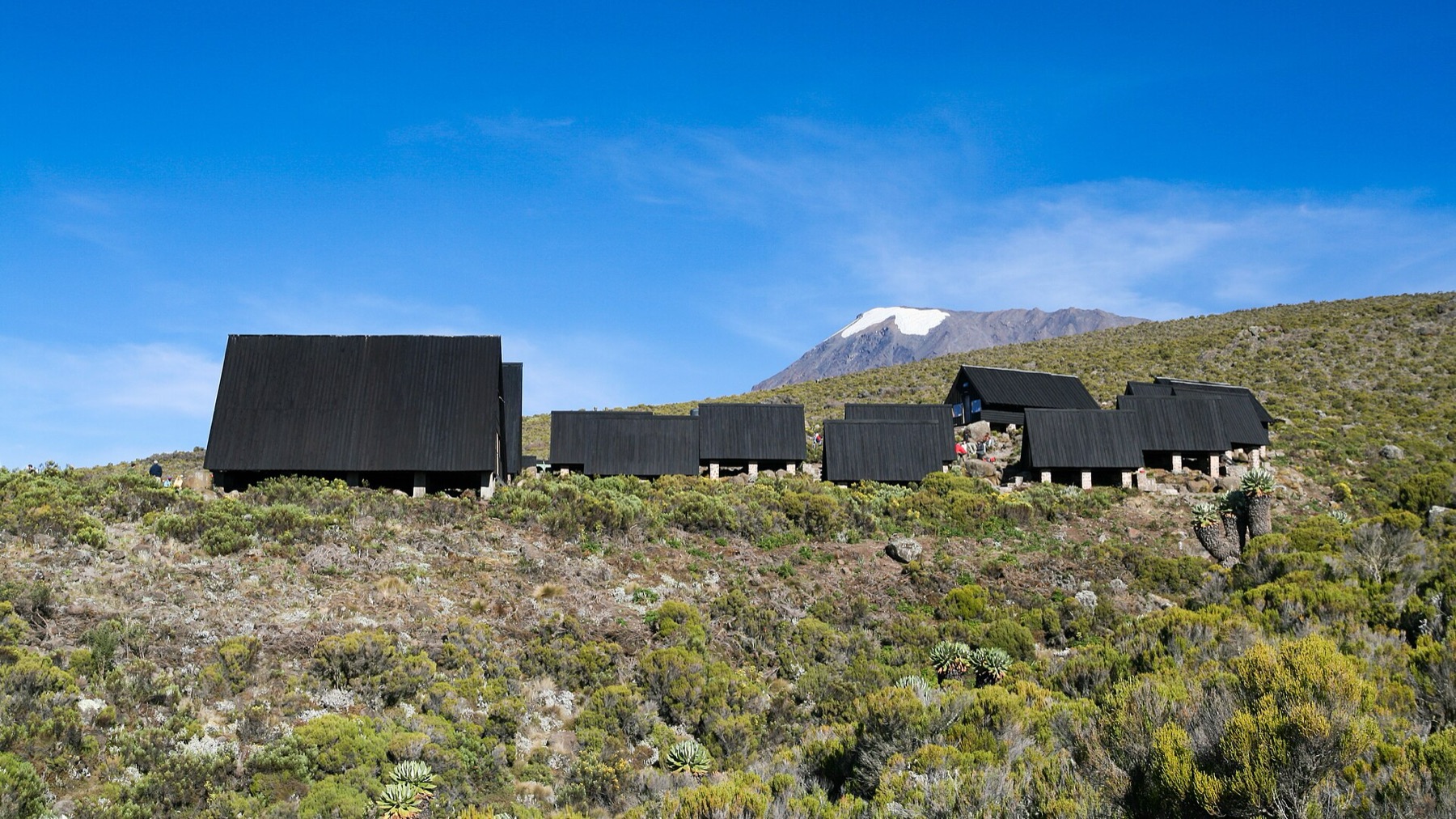
Marangu Route – Hut Accommodation
Marangu is known for its established mountain huts at Mandara, Horombo and Kibo. Climbers sleep in shared hut accommodation rather than carrying out a tent-camping routine.
Best Kilimanjaro tour operator
Best Kilimanjaro tour operator
Best Kilimanjaro tour operator
Planning to climb Mount Kilimanjaro? Compare the Marangu and Machame routes, understand what affects the total price, explore the itineraries and accommodation, and prepare a realistic budget before booking your Tanzania adventure.
The cost of climbing Mount Kilimanjaro depends on more than the route name. Your total budget is influenced by the number of days on the mountain, group size, accommodation, park-related charges, mountain crew arrangements, transfers and the services included in your package.
The Marangu Route and Machame Route are two established ways to reach Uhuru Peak. They offer different mountain experiences. Marangu is known for its mountain huts and its ascent-and-descent using the same general trail. Machame is a camping route with a more varied approach across the southern side of the mountain.
When comparing quotations, make sure you are comparing the same number of trekking days and the same services. A lower headline price does not automatically mean that two climbing packages offer the same experience.
The best way to compare the two routes is to look at the same trekking duration, group size and service level. The figures below are JoyTrekking's published package listings, not a guaranteed quotation for every traveller.
| Route | Published package duration | Displayed price | Mountain accommodation |
|---|---|---|---|
| Marangu Route | 6 Days / 5 Nights | US$2,857 | Mountain huts |
| Machame Route | 7 Days / 6 Nights | US$3,500 | Tent camping |
These are published package listings on the JoyTrekking website. They should not be treated as a guaranteed solo rate or a final quote for a smaller private group. The actual amount depends on your selected itinerary, group size, travel dates and confirmed services.
For a current per-person estimate, use the JoyTrekking Kilimanjaro Cost Calculator. It allows travellers to compare Marangu and Machame options by duration and group size, including the calculator's stated two hotel nights.
Open Live Kilimanjaro Cost CalculatorSome expenses are shared across a group, while other charges depend on each climber and the length of the trek. A private climb for one person therefore should not be expected to cost the same per person as a larger group booking.
| Cost factor | How it can affect your quotation |
|---|---|
| Group size | Some transport and operational costs can be shared among more climbers. Ask for the per-person rate at your exact group size. |
| Number of trekking days | Additional days can affect crew arrangements, meals, accommodation and applicable park charges. |
| Park and hut or camping charges | Route and duration influence the park-related fees that apply. Request a current breakdown. |
| Mountain crew | Guides, assistant guides, cooks and porters are part of the operational plan. Ask how the crew is organised and paid. |
| Hotel accommodation | Check how many nights are included before and after the trek and the hotel category. |
| Transfers | Airport transfers and transport between your hotel and the mountain gate may be priced differently by operator. |
| Personal equipment | Rental equipment may be an additional expense if you do not bring your own suitable gear. |
Both routes lead to the same mountain summit, but their accommodation, trail direction, daily stages and scenery are different.
Marangu is known for its established mountain huts at Mandara, Horombo and Kibo. Climbers sleep in shared hut accommodation rather than carrying out a tent-camping routine.

Machame uses designated campsites. A mountain crew prepares the camp and meals, while climbers sleep in tents during the trek.
| Feature | Marangu Route | Machame Route |
|---|---|---|
| Common nickname | Coca-Cola Route | Whiskey Route |
| Starting side | Southeastern side of Kilimanjaro | Southwestern side of Kilimanjaro |
| Accommodation | Mountain huts | Tents at designated campsites |
| Typical duration | 5 or 6 mountain days | 6 or 7 mountain days |
| Ascent and descent | Uses the same general trail in both directions | Usually ascends via Machame and descends via Mweka |
| Trail experience | Forest, moorland, alpine desert and summit zone | Forest, Shira Plateau, Barranco area, alpine desert and summit zone |
| Acclimatisation opportunity | The 6-day itinerary adds a day at Horombo | The 7-day itinerary offers more time than the compressed 6-day option |
| Camping equipment | No personal mountain tent required for hut accommodation | Camping equipment is required and should be confirmed with the operator |
Neither route removes the physical demands of high altitude. Your fitness, health, pacing, itinerary and response to altitude all matter. A longer itinerary provides more time for gradual ascent, but no duration guarantees that a climber will reach the summit.
The Marangu Route approaches Kilimanjaro from the southeast through Marangu Gate. It is one of the mountain's established trekking routes and is widely recognised for providing hut accommodation on the mountain.
The main overnight hut locations are Mandara Hut, Horombo Hut and Kibo Hut. Accommodation is shared, so climbers should expect a communal mountain environment rather than a private hotel room. Bring or arrange a suitable sleeping bag even though you are staying in huts.
Marangu is sometimes called the Coca-Cola Route. The nickname does not mean that the climb is easy. Reaching 5,895 metres is a serious high-altitude undertaking regardless of the route selected.
Published route-distance estimates vary according to the itinerary and how distance is measured. A commonly quoted overall estimate is approximately 72–82 kilometres for the round trip. Confirm the exact daily stages in the itinerary supplied by your operator.
The five-day version is a compressed itinerary. It generally follows the same hut sequence but does not include a dedicated extra acclimatisation day at Horombo.
After registration and the start of the trek, walk through the montane rainforest towards Mandara Hut. The trail is shaded in many sections and gradually gains altitude.
Approximate stage: 8 km · Around 4–5 hours · Mandara Hut, about 2,700m
Continue beyond the forest into open moorland, with changing vegetation and broader views as you approach Horombo.
Approximate stage: 12 km · Around 6–8 hours · Horombo Hut, about 3,720m
Cross the high-altitude Saddle between Mawenzi and Kibo. The landscape becomes increasingly open and alpine, with limited vegetation.
Approximate stage: 9–10 km · Around 5–6 hours · Kibo Hut, about 4,700m
Begin the summit attempt during the night, following your guide's instructions and pace. After reaching the summit area, descend to Kibo and continue down to Horombo if conditions and the itinerary permit.
A very long and demanding summit day. The total time varies considerably.
Descend through the moorland and forest to Marangu Gate, where the trek concludes.
Approximate stage: around 20 km · Often 5–7 hours, depending on conditions and pace
The six-day option adds an extra day at Horombo Hut. This creates more time on the mountain before continuing towards Kibo and the summit attempt.
Enter the rainforest and trek to Mandara Hut for the first overnight stay.
About 8 km · 4–5 hours · 2,700m
Ascend through the forest edge and moorland towards Horombo Hut.
About 12 km · 6–8 hours · 3,720m
Spend an additional day in the Horombo area. Depending on conditions and the guide's assessment, the group may take an acclimatisation walk towards Zebra Rocks or in the direction of Mawenzi before returning to sleep at Horombo.
The exact walk and altitude reached should be decided by the guide according to conditions and climbers' wellbeing.
Cross the Saddle towards Kibo Hut. Rest, hydrate and prepare for the summit attempt according to your guide's instructions.
About 9–10 km · 5–6 hours · 4,700m
Start the summit attempt during the night. After the summit attempt, descend carefully to Kibo and continue to Horombo for the overnight stay, subject to the itinerary and conditions.
A demanding summit day with a long descent.
Complete the descent through moorland and rainforest to Marangu Gate.
Approximately 20 km, depending on the route measurement used.
The Machame Route approaches Kilimanjaro from the southwest. It is known for its changing landscapes and a route profile that passes through the forest, the Shira Plateau, the Barranco area and the high-altitude terrain below the summit.
Unlike Marangu, Machame is a camping route. Climbers sleep in tents at designated campsites, with the mountain crew responsible for the camp arrangements specified in the package.
The seven-day Machame itinerary is commonly selected by travellers who want more time on the mountain than the compressed six-day version. The additional day changes the pace and gives the itinerary more room for gradual progression, although it cannot guarantee an individual response to altitude.
Register at the gate and begin trekking through the rainforest. The trail gradually climbs towards Machame Camp.
Approximate stage: 10–11 km · Around 5–7 hours
Leave the forest behind and climb onto the Shira Plateau. The terrain opens up, with wide mountain views when the weather allows.
Approximate stage: 5 km · Around 4–6 hours
Climb towards the Lava Tower area before descending towards Barranco Camp. This is a key part of the route's climb-high, sleep-lower profile, as planned by the itinerary and guide.
Approximate stage: 10 km · Around 6–8 hours
Cross the Barranco Wall with guidance from the mountain team, then continue through the high-altitude landscape towards Karanga Camp.
Approximate stage: 5 km · Around 4–5 hours
Continue towards Barafu, the high camp used before the summit attempt. Rest and prepare your equipment according to the guide's instructions.
Approximate stage: 4 km · Around 3–4 hours
Begin the summit attempt at night. After reaching Uhuru Peak, descend via the southern route towards Mweka Camp.
A long summit day. Timing varies with weather, pace and individual condition.
Descend through the forest to Mweka Gate, complete the park procedures and finish the trek.
Approximate stage: 10 km · Around 3–5 hours

Marangu's overnight stops use shared mountain huts. Expect communal sleeping arrangements and basic facilities. Confirm the hut arrangement, sleeping arrangements and facilities with your operator.

Machame climbers sleep in tents at designated camps. Ask whether the package provides sleeping tents, sleeping mats, dining arrangements and other camping equipment.
Hut accommodation does not mean that Marangu is a hotel-based trek. Conditions are basic and shared. Likewise, camping does not automatically mean an uncomfortable experience: the quality of the tent, sleeping mat, food arrangements and crew support should be confirmed in writing.
For both routes, ask what sleeping equipment is supplied and what you need to bring or rent. A suitable sleeping bag, warm layers and personal trekking equipment remain important considerations.
A professional Kilimanjaro quotation should explain exactly what the operator is charging for. The following are cost categories to check, not a promise that every item is included in every package.
Some costs are commonly arranged separately by travellers. Check your own quotation and travel plan for:
Official reference: TANAPA Park Tariffs and Fees.
Request a detailed written quotation from your tour operator. Use this checklist to understand what you are paying for and to compare offers fairly.
A clear quotation helps you understand the real value of a climb. Do not choose an operator solely because its headline price is the lowest. Compare the services, safety arrangements, crew treatment and itinerary details.
Kilimanjaro can be climbed during different parts of the year, but weather conditions influence the trekking experience. TANAPA describes the mountain's seasonal rainfall patterns, with generally drier climbing periods including late June to September and December to early March. Conditions can still change at any time on the mountain.
Many international travellers consider the January-to-mid-March and June-to-October periods when planning. These periods can be popular, so availability and the expected weather should be discussed before confirming dates.
Ask your operator about the conditions expected for your travel dates, the equipment you will need and any changes that may be made to the itinerary for safety.
Official park information: Kilimanjaro National Park – TANAPA.
Mount Kilimanjaro reaches 5,895 metres above sea level. At this altitude, climbers can experience altitude-related illness, and physical fitness alone does not predict how someone will respond.
Choose an itinerary that allows a sensible pace and adequate time for acclimatisation. Follow your qualified guide's instructions, communicate honestly about how you feel and never hide symptoms to continue towards the summit. Your guide should explain the group's safety procedures and the circumstances in which a climber may need to descend.
Before travelling, speak with a qualified healthcare professional about your personal suitability for high-altitude trekking, travel health and any medication questions. Arrange travel insurance that explicitly covers the activities and altitude involved.
JoyTrekking Tours & Safaris is based in Arusha, Tanzania. We help international travellers explore Kilimanjaro route options and plan their wider Tanzania journeys.
Whether you are considering Marangu's mountain huts or Machame's camping experience, start by comparing the itinerary, group size and services you need. Our team can help you understand the available options and prepare a quotation for your travel plans.
Compare routes and durations before choosing the itinerary that fits your available time and preferences.
Compare Climbing CostsShare your preferred route, travel dates and group size so the team can prepare a quotation for your trip.
Chat on WhatsAppYour Kilimanjaro adventure can be part of a longer Tanzania holiday. After your climb and a suitable period of rest, you may wish to explore the country's wildlife destinations or relax along the Indian Ocean coast.
Explore safari options in destinations such as Serengeti, Ngorongoro and Tarangire.
Explore Safari Packages →Discover island beaches, Stone Town experiences and coastal stays after your mountain adventure.
Explore Zanzibar →When comparing Kilimanjaro companies, take time to read feedback from previous travellers. Look for detailed comments about communication, guides, food, equipment, safety procedures and how the team treated its mountain crew.
Read JoyTrekking's available traveller feedback on its review profile. Review content and ratings can change, so visit the profile directly for the latest information.
Read JoyTrekking ReviewsIt depends on the itinerary, duration, group size and services included. JoyTrekking's published package listings show Marangu 7 Days / 6 Nights at US$1,770 and Machame 8 Days / 7 Nights at US$2,160. These are published package prices, not guaranteed individual quotations. Use the live calculator to compare your actual group size and selected duration.
The final cost depends on the number of trekking days, group size, travel dates and package inclusions. JoyTrekking's live cost calculator provides current group-size options for Marangu. Request a written quotation to confirm the final amount and included services.
Machame pricing varies with the selected duration, group size and package arrangements. JoyTrekking lists an 8 Days / 7 Nights Machame package at US$2,160 on its website. Check the live calculator for current per-person pricing for your group.
Yes. Marangu is known for mountain hut accommodation at Mandara, Horombo and Kibo. The huts are shared and basic. Climbers should still arrange a suitable sleeping bag.
Yes. Machame is a camping route, with overnight stays at designated campsites. Ask your operator which camping equipment, sleeping mats and dining arrangements are included.
Both options are offered by operators. The six-day itinerary normally includes an additional acclimatisation day at Horombo. The five-day option is shorter and does not include that dedicated extra day.
Machame is commonly offered as a six- or seven-day trek. The exact stages and overnight camps can differ by operator, so review the complete itinerary before booking.
The answer depends on the exact itinerary. A six-day Marangu itinerary adds an extra day at Horombo compared with its five-day version. A seven-day Machame itinerary allows more time than a compressed six-day Machame option. No itinerary guarantees that a climber will acclimatise successfully.
People without previous high-altitude trekking experience do climb Kilimanjaro, but it remains a demanding high-altitude expedition. Discuss your experience, fitness, health and preferred itinerary with a qualified operator and healthcare professional before booking.
Many guided packages include applicable park charges, but you should never assume this. Ask for a written breakdown that identifies the park, hut or camping, rescue and other applicable charges included in your quotation.
The live calculator currently describes its route options as including two hotel nights, one before and one after the climb. Confirm the selected option and hotel arrangements directly with JoyTrekking when requesting your final quotation.
Yes. Many travellers plan a Tanzania wildlife safari before or after their climb. Discuss the length of your trek, recovery time and safari dates with your travel planner so the overall trip is realistic.
Tell JoyTrekking your preferred route, travel dates, number of climbers and trekking duration. Our Arusha-based team can help you review the options and request a clear quotation for your Kilimanjaro adventure.
Travel information and package prices can change. Route distances and daily trekking times are approximate and may vary with the itinerary, weather, trail conditions and individual pace. Always confirm current park tariffs, inclusions, itinerary details and final prices in writing with your tour operator. This article is general travel-planning information and is not medical advice.