Planning to climb Mount Kilimanjaro in 2026? This guide breaks down Kilimanjaro Climbing Costs 2026, including permits, guides, tipping, hidden fees, and expert budgeting tips for international travelers.
Excerpt
How much does it really cost to climb Mount Kilimanjaro in 2026? This detailed guide explains permits, park fees, guides, tipping culture, equipment rentals, hidden expenses and how to avoid budget mistakes while planning your dream Tanzania adventure.
Quick Summary
Planning a Mount Kilimanjaro climb in 2026? Here’s the short answer:
Budget climbs: $1,800–$2,500
Mid-range ethical climbs: $2,500–$4,000
Luxury climbs: $4,500–$7,000+
Park fees alone can exceed $800–$1,200
Tipping is mandatory and often overlooked
Cheap operators may compromise safety and porter welfare
Longer routes cost more but increase summit success rates
Hidden fees include gear rental, insurance, visas, and hotel stays
A successful Kilimanjaro expedition is not just about reaching Uhuru Peak. It is about safety, preparation, ethical tourism and choosing the right local operator.
Introduction: Understanding Mount Kilimanjaro Before You Climb
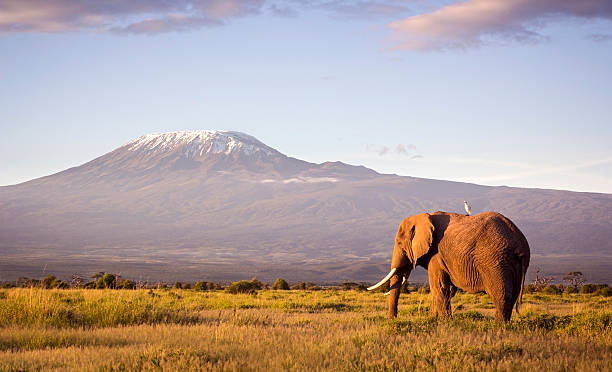
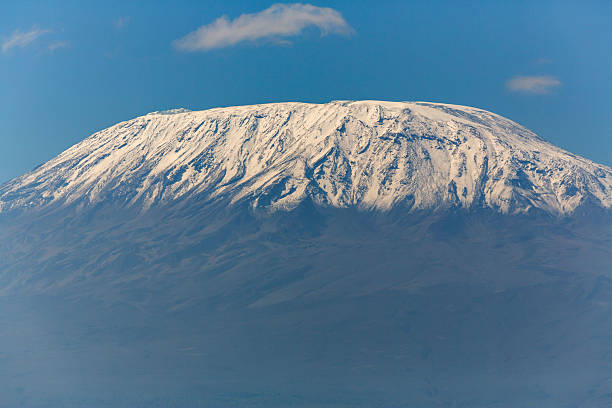
Rising dramatically above the plains of northern Tanzania, Mount Kilimanjaro stands as the tallest mountain in Africa and one of the world’s most iconic trekking destinations.
Located near the Kenya-Tanzania border inside Kilimanjaro National Park, this legendary mountain reaches an incredible height of 5,895 meters (19,341 feet) above sea level. Unlike many famous peaks that require technical mountaineering skills, Kilimanjaro is known as the world’s tallest free-standing mountain and can be climbed by trekkers without ropes or climbing experience.
Every year, thousands of international travelers fly to Tanzania with one dream in mind: standing at Uhuru Peak, the highest point in Africa.
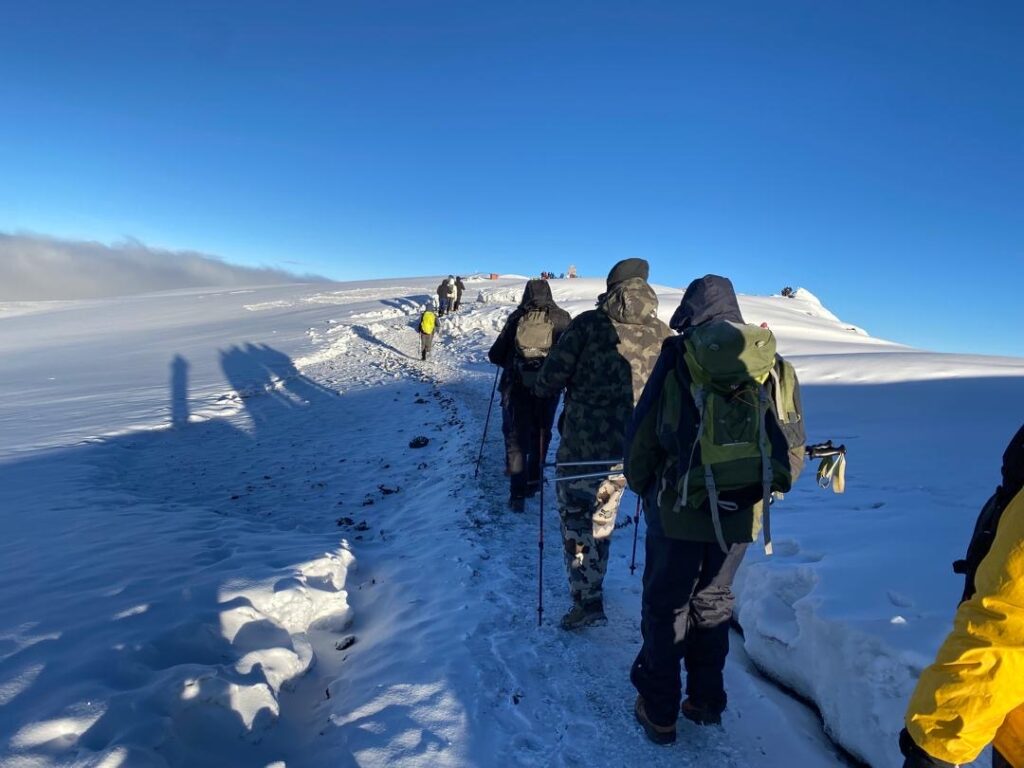
International climbers ascending one of the Mount Kilimanjaro routes, experiencing the journey through diverse landscapes during their trek.
But Mount Kilimanjaro is much more than a mountain.
It is:
A UNESCO World Heritage Site
One of the famous Seven Summits
A symbol of African adventure tourism
Home to glaciers, alpine deserts, rainforests, and volcanic landscapes
A life-changing personal challenge
What makes Kilimanjaro truly unique is its ecological diversity. During the climb, trekkers pass through five different climate zones:
Climate Zone
Experience
Cultivation Zone
Villages and farmland
Rainforest Zone
Dense forest and wildlife
Heath & Moorland
Giant groundsels and open landscapes
Alpine Desert
Rocky high-altitude terrain
Arctic Summit Zone
Ice, glaciers, and freezing temperatures
Within just a few days, climbers experience environments that feel like traveling from the equator to the Arctic.
The mountain also plays a major role in Tanzania’s tourism economy, supporting thousands of local jobs including:
Mountain guides
Porters
Cooks
Hotel staff
Safari operators
Transportation services
This is one of the reasons why Kilimanjaro climbing costs can sometimes surprise travelers. Your payment is not only for reaching the summit it also supports conservation, park management, safety operations and local communities surrounding the mountain.
For international travelers planning a 2026 expedition, understanding the true cost of climbing Kilimanjaro is essential. From permits and guide fees to tipping culture and hidden expenses, proper budgeting can make the difference between a stressful experience and the adventure of a lifetime.
And once you begin the journey toward Uhuru Peak, you quickly realize something important:
Kilimanjaro is not simply a hike.
It is a story you carry forever.
Why Is Climbing Kilimanjaro So Expensive?
For many international travelers, the first reaction after seeing Kilimanjaro prices is usually surprise.
“How can a mountain trek cost several thousand dollars?”
It is a fair question.
At first glance, climbing Mount Kilimanjaro may seem like “just hiking.” But once you understand what happens behind the scenes, the pricing begins to make sense.
Kilimanjaro is not a normal hiking trip.
It is a high-altitude expedition on Africa’s tallest mountain, taking climbers through extreme weather conditions, remote wilderness and oxygen-thin environments where safety, logistics, and experience become critically important.
From the moment you arrive in Tanzania, an entire system begins working to support your summit attempt.
Behind every climber is a professional mountain team that may include:
Lead guides
Assistant guides
Porters
Camp crew
Mountain cooks
Rescue support teams
In many cases, one climber can be supported by more than 10 crew members depending on the route and comfort level.
These teams wake up before dawn, carry heavy equipment through difficult terrain, prepare hot meals at high altitude, monitor climbers for altitude sickness, set up camps, boil drinking water, and ensure safety throughout the expedition.
Most travelers only see the adventure.
But behind the adventure is a massive logistical operation.
Park Fees Alone Are Extremely High
One of the biggest misconceptions is that tour operators keep most of the money.
In reality, a significant portion of your payment goes directly to the Tanzanian government through mandatory park fees charged by Tanzania National Parks Authority.
These fees include:
Conservation fees
Camping or hut fees
Rescue fees
Crew entry fees
VAT taxes
For many routes, park-related costs alone can exceed $1,000 per climber before food, salaries, transport or equipment are even considered.
These funds help protect Kilimanjaro National Park, maintain trails, support rescue infrastructure and preserve one of Africa’s most important natural landmarks.
Smart Ways to Save Money Without Sacrificing Safety
Join a Group Climb
Sharing costs reduces expenses significantly.
Travel During Shoulder Seasons
March, May, and November can offer discounts.
Bring Your Own Gear
Avoid rental costs where possible.
Book Early
Secure lower rates and route availability.
Choose Local Operators
Local companies often provide better value while supporting Tanzanian communities.
What International Travelers Often Get Wrong
Reddit discussions and traveler experiences reveal common mistakes:
Choosing based only on price
Ignoring acclimatization days
Underestimating tipping costs
Booking without insurance
Packing poor-quality gear
Rushing summit schedules
One traveler shared that guide quality dramatically changed the experience and safety of the climb. Another warned that short routes chosen purely to save money often lead to failed summit attempts.
Is Kilimanjaro Worth the Cost?
For many travelers, absolutely yes.
Mount Kilimanjaro is not just a hike.
It is:
The highest mountain in Africa
One of the Seven Summits
A UNESCO World Heritage Site
A personal transformation journey
A cultural experience
A bucket-list achievement
Unlike luxury vacations that fade quickly, the memory of standing on Uhuru Peak often lasts forever.
Sample Budget for a 7-Day Kilimanjaro Climb (2026)
Item
Estimated Cost
Mid-Range Climb Package
$2,800
Flights
$900
Visa
$50
Insurance
$120
Tips
$350
Gear Rental
$150
Hotels
$200
Personal Spending
$150
Estimated Total:
$4,720
Customer Experience
Madeline Wayne2024.12.20
Loved January, Ely, Christian, Filbert, Emmanuel, Elias, and the whole crew. Excellent trip led by excellent people. Whole-heartedly recommend this local company with local guides and porters.
Frequently Asked Questions (FAQ)
How much does it cost to climb Kilimanjaro in 2026?
Most climbers spend between $2,900 and $7,000 depending on route, comfort level and travel style.
Are Kilimanjaro permits included in tour prices?
Usually yes. Most operators include park fees and permits in their package prices.
Can I climb Kilimanjaro without a guide?
No. Tanzanian regulations require all climbers to use licensed guides through registered operators.
Why are Kilimanjaro park fees so expensive?
Fees support conservation, rescue services, park maintenance and local tourism infrastructure
How much should I tip on Kilimanjaro?
Expect approximately $250–$500 per climber depending on group size and route length.
What is the cheapest route on Kilimanjaro?
The Marangu Route is generally the cheapest because it uses huts instead of camping logistics.
Is travel insurance mandatory?
Most reputable operators strongly require insurance covering high-altitude trekking and evacuation.
Which route has the highest success rate?
The Northern Circuit and Lemosho Route usually have the highest summit success due to better acclimatization.
Final Thoughts
Climbing Mount Kilimanjaro is far more than a travel experience it is a personal journey that challenges your body, mindset and perspective in ways few adventures ever can. From the rainforest trails at the base of the mountain to the icy glaciers surrounding Uhuru Peak, every step carries a story of determination, resilience and discovery. But reaching the summit successfully is not simply about choosing the cheapest package online. It is about understanding the real value behind a professionally organized expedition: experienced guides who prioritize your safety, ethical treatment of porters, quality equipment, proper acclimatization, reliable emergency support and a team committed to helping you achieve your dream responsibly.
For international travelers planning a 2026 climb, the true cost of Kilimanjaro should be viewed not as an expense but as an investment in safety, preparation, and unforgettable memories. The reality is that the mountain rewards those who prepare wisely. A well-planned climb dramatically improves your summit success rate, overall comfort and the quality of your entire Tanzania experience. Whether you choose a mid-range trek or a luxury expedition, the goal should always be the same: climb safely, ethically and confidently.
Years after the journey ends, most climbers rarely remember the money they spent. Instead, they remember the sunrise above the clouds, the encouragement from local guides saying “pole pole,” the friendships formed on the trail and the emotional moment of standing on the Roof of Africa. Those are the memories that stay forever and that is what truly makes Kilimanjaro priceless.
Ready to Plan Your Kilimanjaro Adventure?
At JoyTrekking Tours & Safaris, we help international travelers experience Mount Kilimanjaro safely, ethically and professionally.
Experienced local guides
Transparent pricing
Ethical porter treatment
High summit success rates
Personalized climbing support
Contact us today and start planning your unforgettable Tanzania adventure.
About the Author
January Mziray
January Mziray is a Tanzania travel expert, safari specialist and tourism content writer passionate about promoting authentic African adventures. Through educational travel content, January helps international travelers explore Tanzania responsibly while supporting local tourism communities.