Planning to climb Mount Kilimanjaro? Discover the ultimate Kilimanjaro daypack essentials checklist, expert packing tips, common mistakes to avoid, and recommended climbing routes from JoyTrekking Tours & Safaris.
Your Kilimanjaro daypack should include only the items you’ll need during the day’s hike. A good packing strategy balances comfort with preparedness while keeping the pack light enough to carry for several hours.
Kilimanjaro Daypack Essentials: Everything You Need for a Comfortable and Successful Climb
Climbing Mount Kilimanjaro is more than reaching Africa’s highest peak it’s a journey through five unique climate zones, from lush rainforest to alpine desert and the icy summit of Uhuru Peak. Every day on the mountain brings changing weather, fluctuating temperatures, and varying trail conditions. That’s why packing your daypack correctly is one of the most important steps in preparing for a successful climb.
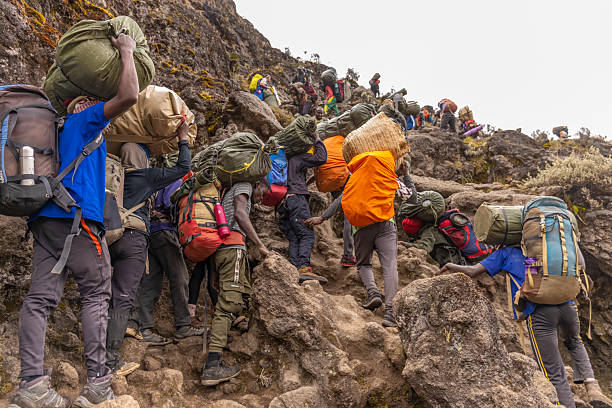
Unlike your larger duffel bag, which is carried by porters, your daypack stays with you throughout each day’s hike. It holds the gear you’ll need immediate access to, including water, snacks, extra clothing layers, rain protection, sunscreen, medication, and personal items. A well-packed daypack keeps you comfortable, organized, and ready to adapt to changing conditions without slowing down your trek.
Whether you’re climbing the scenic Lemosho Route, the popular Machame Route, the quieter Rongai Route or any of Kilimanjaro’s established trails, understanding what belongs in your daypack can make the difference between an enjoyable adventure and an unnecessarily difficult experience.
In this comprehensive guide, you’ll learn exactly what to pack, why each item matters, practical tips from experienced mountain guides, and how to prepare for summit success with JoyTrekking Tours & Safaris.
What Should You Carry in Your Kilimanjaro Daypack?
Your Kilimanjaro daypack should include only the items you’ll need during the day’s hike. A good packing strategy balances comfort with preparedness while keeping the pack light enough to carry for several hours.
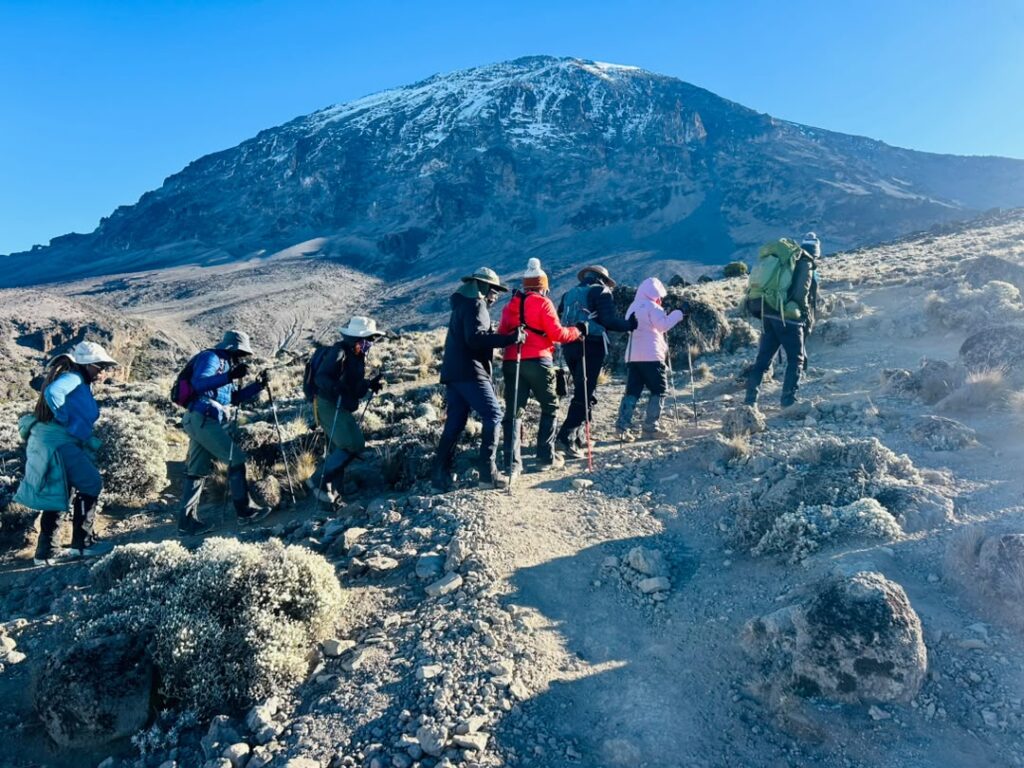
At a minimum, your daypack should contain:
| Essential Item | Why It’s Important |
|---|---|
| Water (2–3 liters) | Prevents dehydration and helps with altitude acclimatization |
| Waterproof jacket | Protects against sudden rain and wind |
| Warm fleece or insulated layer | Keeps you comfortable as temperatures drop |
| Snacks | Maintains energy between meals |
| Sunscreen & lip balm | Protects against intense UV exposure at high altitude |
| Sunglasses | Shields your eyes from strong mountain sunlight |
| Headlamp | Essential for summit night |
| Personal medications | Immediate access whenever needed |
| Camera or phone | Capture unforgettable moments |
| Gloves & warm hat | Necessary in cold conditions |
| Rain cover for backpack | Keeps gear dry during rain |
| Toilet paper & hand sanitizer | Useful throughout the trek |
Aim for a daypack weighing 6–8 kg (13–18 lbs), depending on your clothing layers and camera equipment. Keeping the weight manageable helps conserve energy over multiple days of trekking.
Why Your Kilimanjaro Daypack Matters
Many first-time climbers spend weeks choosing hiking boots but give little thought to what they’ll carry each day. In reality, your daypack is one of the most important pieces of equipment you’ll use on the mountain.
Your porter will transport your main duffel bag between camps, but once you leave camp each morning, your daypack is your lifeline until you arrive at the next campsite. Everything you might need during the day’s hike must be within easy reach.
A thoughtfully packed daypack allows you to:
- Stay hydrated without stopping frequently.
- Adjust clothing quickly as temperatures change.
- Access rain gear immediately during sudden showers.
- Eat energy-rich snacks throughout the day.
- Keep important medications close at hand.
- Protect electronics and valuables from moisture.
- Maintain comfort and confidence during long trekking days.
Weather on Kilimanjaro can change rapidly. You may start the morning in cool mist, walk through warm sunshine by midday, encounter rain in the afternoon, and finish the day in near-freezing temperatures. Having the right gear available when conditions shift helps you stay comfortable and focused on the climb rather than on discomfort.
Proper organization is equally important. Frequently used items such as water bottles, snacks, sunscreen, and gloves should be stored in easily accessible pockets. Less frequently used gear, like an extra fleece or rain pants, can be packed deeper inside the bag. Using waterproof stuff sacks or zippered pouches keeps clothing and electronics dry even if rain finds its way into your backpack.
Your daypack also plays a role in altitude management. High altitude often suppresses appetite and increases fluid loss. Keeping water and snacks readily available encourages regular hydration and nutrition, both of which support acclimatization and help reduce fatigue.
Finally, carrying only what you truly need minimizes unnecessary weight. Every extra kilogram becomes more noticeable as you gain elevation, especially on summit day. Choosing lightweight, functional gear and packing with intention will make each step toward Uhuru Peak feel more manageable.
The Ultimate Kilimanjaro Daypack Essentials Checklist
Packing for Kilimanjaro isn’t about bringing as much gear as possible it’s about carrying the right gear at the right time. Your daypack should contain the essentials that keep you comfortable, safe, and prepared for changing mountain conditions while remaining light enough to carry over several days.
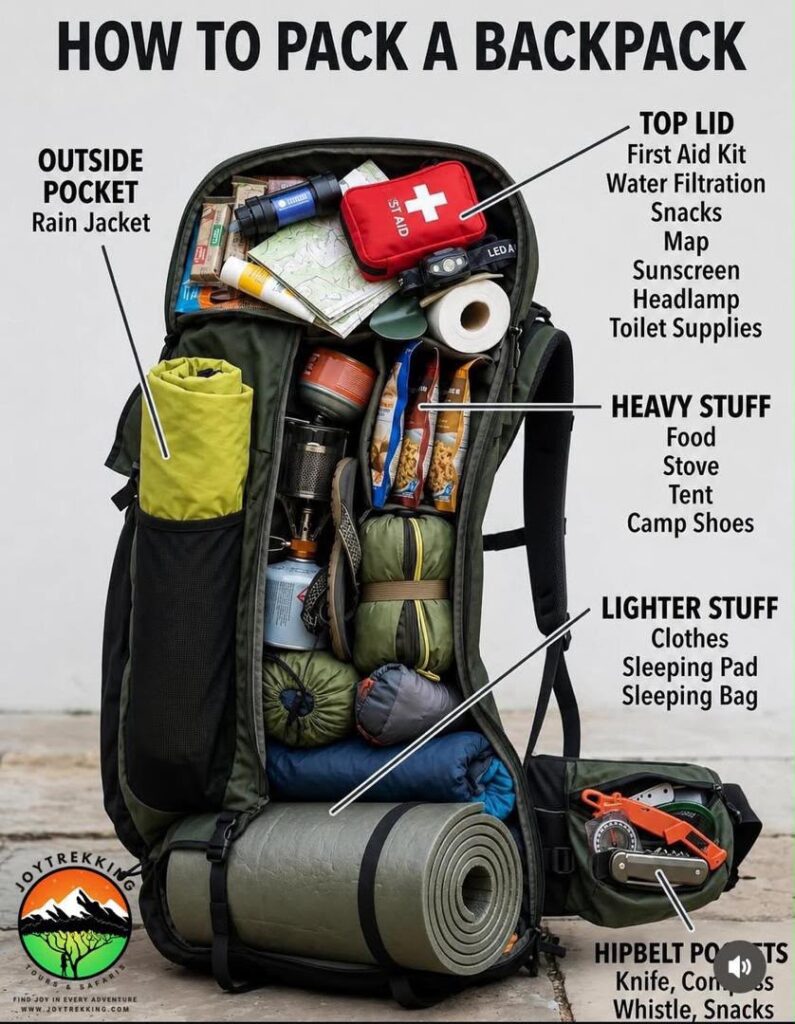
Below is a detailed breakdown of the most important items every climber should include.
1. Hydration: Your Top Priority
Staying hydrated is one of the most effective ways to support your body at altitude. As you climb higher, the air becomes drier and your breathing rate increases, causing you to lose more fluids than you might realize. Even mild dehydration can contribute to headaches, fatigue, and reduced performance.
Most experienced Kilimanjaro guides recommend carrying 2–3 liters of water each day, depending on the route, weather conditions, and your personal needs. Many climbers use a hydration bladder for easy sipping while walking, along with an insulated water bottle to prevent freezing during the summit ascent.
Electrolyte tablets or hydration powders can also be a valuable addition, helping replace minerals lost through sweat and encouraging consistent fluid intake.
Pro Tip: Sip small amounts of water regularly throughout the day rather than waiting until you feel thirsty. Consistent hydration supports acclimatization and keeps your energy levels more stable.
Clothing Layers: Be Ready for Every Climate Zone
One of the unique aspects of climbing Mount Kilimanjaro is that you’ll pass through multiple ecological zones in just a few days. You may begin the morning in a cool rainforest, enjoy warm sunshine at midday, and end the day in freezing temperatures at high altitude. Because of these rapid weather changes, dressing in layers—and carrying the right extra layers in your daypack is essential.
Instead of packing one heavy jacket, experienced climbers use a layering system that allows them to add or remove clothing as conditions change.
Base Layer
Your base layer sits directly against your skin and should wick moisture away from your body. Avoid cotton, as it absorbs sweat and dries slowly, leaving you feeling cold.
Recommended materials:
- Merino wool
- Synthetic moisture-wicking fabrics
- Lightweight thermal tops
Mid Layer
A fleece or lightweight insulated jacket provides warmth during cooler sections of the hike. Even if the day starts warm, temperatures can drop quickly as you gain elevation.
Carry one:
- Fleece jacket
- Lightweight insulated jacket
- Synthetic puffy jacket
Outer Layer
Your waterproof shell is your first defense against wind, rain, and snow. Even during the dry season, unexpected showers are possible on Kilimanjaro.
Your shell should be:
- Waterproof
- Windproof
- Breathable
- Lightweight
- Easy to pack
Extra Warmth for Summit Night
Summit night is the coldest part of the entire expedition, with temperatures often dropping well below freezing. Before leaving camp, you’ll likely wear additional layers, but keeping lightweight emergency insulation in your daypack provides extra security if weather conditions become harsher than expected.
Expert Tip from JoyTrekking Tours & Safaris
“Our mountain guides recommend packing one additional lightweight insulating layer in your daypack, even if you think you won’t need it. Mountain weather can change faster than most climbers expect.”
Rain Protection: Never Underestimate Mountain Weather
Rain can arrive unexpectedly on Kilimanjaro, particularly in the rainforest zone or during transitional seasons. Staying dry isn’t just about comfort—it helps maintain body temperature and reduces the risk of becoming chilled.
Your daypack should always include:
| Rain Gear | Why You Need It |
|---|---|
| Waterproof rain jacket | Protection from rain and wind |
| Backpack rain cover | Keeps your gear dry |
| Waterproof stuff sacks | Organizes clothing and electronics |
| Lightweight rain pants (optional but recommended) | Added protection during extended rainfall |
Even on days that begin with clear skies, experienced guides encourage climbers to carry waterproof layers because weather forecasts can change rapidly in mountainous terrain.
Food & Energy Snacks
Your body burns a significant number of calories each day while trekking. Although your mountain crew prepares hearty meals at camp, keeping snacks in your daypack helps maintain steady energy levels between breaks.
Good snack options include:
- Energy bars
- Trail mix
- Mixed nuts
- Dried fruit
- Chocolate
- Granola bars
- Beef jerky (if preferred)
- Energy chews
- Electrolyte gummies
Many climbers notice a reduced appetite at higher elevations. Small, easy-to-eat snacks are often more appealing than large meals and can help you continue fueling your body throughout the day.
Quick Energy Tips
- Eat small portions every 60–90 minutes.
- Drink water whenever you snack.
- Carry one “emergency snack” that you don’t plan to eat unless needed.
- Store snacks where you can reach them without unpacking your entire bag.
Health & Safety Essentials
Preparing for altitude and changing weather means carrying a few important health and safety items within easy reach.
Personal Medications
Bring any prescription medications you normally take, along with clear instructions from your healthcare provider if needed. These should always remain in your daypack rather than your duffel bag.
Common examples include:
- Asthma inhalers
- Allergy medication
- Diabetes supplies
- Personal prescriptions
Basic First Aid Items
Your guide team will carry a comprehensive first aid kit, but having a few personal essentials is convenient.
Recommended items include:
- Adhesive bandages
- Blister treatment
- Pain relief medication
- Antiseptic wipes
- Small roll of athletic tape
Sunscreen
Many climbers underestimate how intense the sun becomes at higher elevations. UV exposure increases with altitude, making sunscreen one of the most important items in your daypack.
Carry:
- SPF 30–50 sunscreen
- Lip balm with SPF protection
- Reapply throughout the day
Hand Sanitizer
Hand hygiene is particularly important during multi-day treks. Alcohol-based hand sanitizer allows you to clean your hands before meals and after restroom breaks.
Toilet Paper
Portable toilet paper or tissues are small items that many first-time climbers forget. Keep them inside a waterproof zip bag to protect them from moisture.
Electronics & Navigation
While Kilimanjaro is guided, electronics help document your journey and improve comfort.
Headlamp
A reliable headlamp is absolutely essential, especially for summit night when you’ll begin hiking well before sunrise.
Choose one with:
- LED lighting
- Adjustable brightness
- Long battery life
- Spare batteries or a rechargeable backup
Smartphone
Many climbers use their phones for:
- Photography
- Offline maps
- Journaling
- Emergency contacts
- Altitude tracking apps
Keep your phone inside a waterproof pouch and close to your body during cold conditions to preserve battery life.
Camera
If photography is important to you, a lightweight mirrorless or compact camera offers excellent image quality without adding excessive weight.
Power Bank
Cold temperatures drain batteries quickly.
Bring:
- 10,000–20,000 mAh power bank
- Charging cable
- Protective waterproof pouch
Personal Essentials
These small items often make a surprisingly big difference during your climb.
Sunglasses
High-quality sunglasses protect your eyes from intense sunlight and glare, especially above the cloud line.
Look for:
- UV400 protection
- Polarized lenses (optional)
- Secure fit
Hat
Pack both:
- Sun hat or cap
- Warm beanie for cold mornings and summit night
Gloves
Carry insulated gloves suitable for cold temperatures. Many climbers also pack lightweight liner gloves that can be worn separately or under heavier gloves.
Buff or Neck Gaiter
A versatile buff helps protect your face from dust, wind, cold, and strong sunlight.
Lip Balm
Dry mountain air can quickly chap your lips. Keeping SPF lip balm in an accessible pocket allows you to reapply throughout the day.
What Your Porter Carries vs. What You Carry
One of the advantages of climbing with JoyTrekking Tours & Safaris is that professional mountain porters transport your main duffel bag between camps, allowing you to hike with only your daypack. Understanding who carries what helps you pack efficiently and avoid unnecessary weight.
| Your Daypack | Porter’s Duffel Bag |
|---|---|
| Water | Sleeping bag |
| Snacks | Spare clothing |
| Waterproof jacket | Additional hiking gear |
| Warm layer | Camp shoes |
| Gloves | Toiletries not needed during the day |
| Hat | Extra snacks and personal items |
| Camera | Travel clothing |
| Headlamp | Larger electronics and chargers |
| Personal medication | Sleeping gear |
| Sunscreen | Non-essential items |
Remember that you won’t have access to your duffel bag until you arrive at the next campsite. If you think you’ll need something during the day’s trek, it belongs in your daypack.
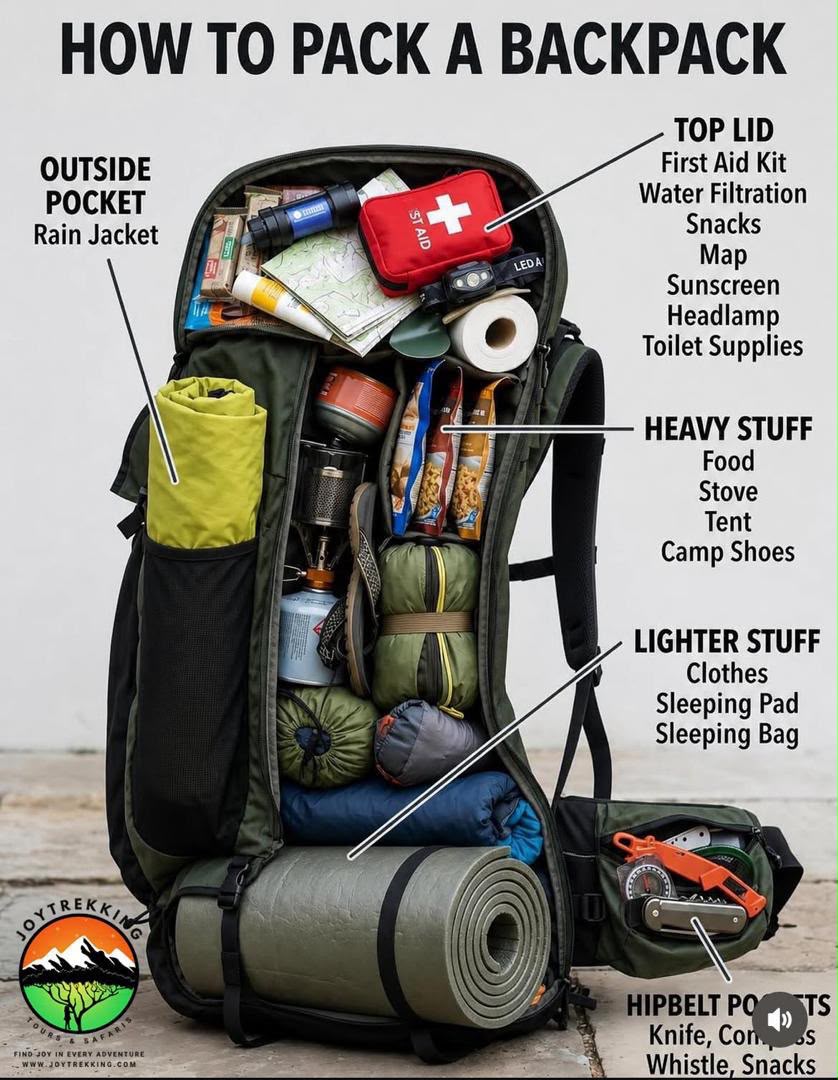
How to Pack Your Daypack Efficiently
Packing isn’t only about choosing the right equipment—it’s also about organizing it so you can access what you need without wasting time on the trail.
A simple packing strategy works best:
- Place heavier items close to your back for better balance.
- Store frequently used items such as snacks, sunscreen, lip balm, and gloves in outer pockets.
- Keep electronics inside waterproof pouches.
- Pack extra clothing in a dry bag to protect it from rain.
- Secure loose straps to prevent snagging on vegetation.
- Leave a little extra space so you can remove or add clothing layers during the day.
An organized backpack reduces frustration and allows you to focus on enjoying the climb rather than searching for equipment every time the weather changes.
By following these practical packing principles, you’ll hike more comfortably, protect your gear from the elements, and be well prepared for every stage of your Kilimanjaro adventure with JoyTrekking Tours & Safaris.
Common Kilimanjaro Daypack Packing Mistakes (And How to Avoid Them)
Even physically fit climbers can make packing mistakes that affect their comfort and performance on the mountain. After guiding hundreds of successful Kilimanjaro expeditions, the team at JoyTrekking Tours & Safaris has identified several common issues that first-time trekkers face.
Learning from these mistakes before your climb can make your journey safer, more enjoyable, and increase your chances of reaching Uhuru Peak.
1. Carrying Too Much Weight
A common misconception is that bringing more equipment means being better prepared. In reality, every extra kilogram becomes increasingly noticeable as you climb higher.
An overloaded backpack can lead to:
- Faster fatigue
- Shoulder and back pain
- Reduced hiking pace
- Increased energy consumption
- Less enjoyment during the trek
Aim to keep your daypack between 6–8 kg (13–18 lbs), depending on your clothing, camera equipment, and water supply.
2. Packing Cotton Clothing
Cotton may be comfortable at home, but it’s one of the least suitable fabrics for mountain climbing.
Cotton:
- Absorbs sweat
- Dries slowly
- Becomes heavy when wet
- Increases the risk of getting cold
Instead, choose:
- Merino wool
- Polyester
- Synthetic performance fabrics
These materials wick moisture away from your body and help regulate temperature throughout the day.
3. Not Drinking Enough Water
Dehydration is one of the most common challenges on Kilimanjaro.
Many climbers don’t feel thirsty in the cool mountain air, but their bodies continue losing water through breathing and exertion.
Signs of dehydration include:
- Headache
- Fatigue
- Dark urine
- Dizziness
- Reduced concentration
Experienced guides often remind climbers to drink regularly, even when they don’t feel thirsty.
4. Storing Important Items Deep Inside the Backpack
Imagine reaching for your rain jacket during a sudden downpour and discovering it’s buried beneath several layers of clothing.
Frequently used items should always be easily accessible, including:
- Water
- Snacks
- Rain jacket
- Gloves
- Hat
- Sunscreen
- Lip balm
- Camera
Good organization saves time and keeps you comfortable throughout the hike.
5. Forgetting Spare Batteries
Cold temperatures drain batteries much faster than most people expect.
If you’re carrying:
- Headlamp
- Camera
- GPS device
- Smartphone
Always bring spare batteries or a fully charged power bank.
Store electronics close to your body during summit night to keep them warmer and extend battery life.
6. Ignoring Weather Changes
Mountain weather can change within minutes.
A sunny morning can quickly become:
- Windy
- Rainy
- Foggy
- Freezing
Always keep waterproof clothing in your daypack, regardless of the forecast.
Expert Packing Tips from JoyTrekking Tours & Safaris
Over years of guiding international travelers on Mount Kilimanjaro, the experienced mountain team at JoyTrekking Tours & Safaris has developed practical strategies that help climbers stay comfortable and organized.
Here are some of their most valuable recommendations.
Use Dry Bags
Separate clothing into waterproof stuff sacks.
For example:
- One bag for warm layers
- One bag for electronics
- One bag for snacks
- One bag for personal items
This makes finding equipment much easier while keeping everything dry.
Test Your Backpack Before Arrival
Don’t wait until you’re in Tanzania to discover your backpack doesn’t fit properly.
Practice by:
- Wearing it on day hikes.
- Adjusting the shoulder straps.
- Tightening the hip belt.
- Walking for several hours.
A properly fitted backpack significantly improves comfort during long trekking days.
Label Everything
If you’re traveling with friends or joining a group climb, clearly label:
- Water bottles
- Camera batteries
- Chargers
- Clothing bags
This reduces confusion at campsites.
Keep Valuables With You
Passports, cash, phones, travel insurance documents, and medications should remain in your daypack rather than your duffel bag.
Pack the Night Before
Each evening, organize your daypack for the following day’s hike.
Doing this allows you to:
- Start early without rushing.
- Double-check your equipment.
- Replace snacks and water.
- Prepare clothing for expected weather.
Recommended Kilimanjaro Routes with JoyTrekking Tours & Safaris
Choosing the right route is just as important as packing the right daypack. Every Kilimanjaro route offers a different experience, varying in scenery, acclimatization profile, duration, and level of challenge.
Below are the featured climbing packages offered by JoyTrekking Tours & Safaris.
| Route | Duration | Starting From | Best For |
|---|---|---|---|
| Marangu Route | 6 Days / 5 Nights | $1,770 | First-time climbers who prefer mountain huts |
| Machame Route | 7 Days / 6 Nights | $2,160 | Excellent scenery and strong acclimatization |
| Umbwe Route | 6 Days / 5 Nights | $2,180 | Experienced hikers seeking a challenging ascent |
| Rongai Route | 7 Days / 6 Nights | $2,240 | Quieter trail with gradual climbing |
| Lemosho Route | 8 Days / 7 Nights | $2,840 | One of the highest summit success rates and spectacular landscapes |
| Northern Circuit Route | 9 Days / 8 Nights | $2,850 | The longest route with excellent acclimatization and panoramic views |
Marangu Route – Comfortable Hut Accommodation
Known as the “Coca-Cola Route,” Marangu is the only Kilimanjaro route that provides overnight accommodation in mountain huts instead of tents. It is an attractive option for climbers seeking a shorter itinerary with more structured facilities.
Highlights:
- Mountain hut accommodation
- Well-established trail
- Suitable for beginners with good preparation
- 6 Days / 5 Nights
- Starting from $1,770
Machame Route – Tanzania’s Most Popular Trail
The Machame Route combines stunning scenery with an excellent acclimatization profile. Climbers experience rainforest, moorland, alpine desert, and glaciers before reaching Uhuru Peak.
Highlights:
- Spectacular landscapes
- Good summit success rate
- Ideal for adventurous trekkers
- 7 Days / 6 Nights
- Starting from $2,160
Umbwe Route – For Experienced Adventurers
Umbwe is one of the steepest and most demanding Kilimanjaro routes. It is generally recommended for experienced hikers who are comfortable with rapid elevation gain and physically challenging terrain.
Highlights:
- Challenging ascent
- Less crowded
- Dramatic scenery
- 6 Days / 5 Nights
- Starting from $2,180
Rongai Route – Quiet and Scenic
Approaching Kilimanjaro from the northern side near the Kenyan border, the Rongai Route receives fewer climbers and offers a peaceful trekking experience.
Highlights:
- Less crowded
- Drier conditions
- Gentle gradients
- 7 Days / 6 Nights
- Starting from $2,240
Lemosho Route – A Favorite Among Experienced Guides
Many professional guides consider Lemosho one of the finest routes on Kilimanjaro. Its longer itinerary provides more time for acclimatization while showcasing diverse landscapes and breathtaking scenery.
Highlights:
- Outstanding scenery
- Excellent acclimatization
- High summit success rate
- 8 Days / 7 Nights
- Starting from $2,840
Northern Circuit Route – The Ultimate Kilimanjaro Experience
The Northern Circuit is the longest standard route on Mount Kilimanjaro. Its extended itinerary gives climbers the best opportunity to acclimatize while exploring remote areas that few visitors experience.
Highlights:
- Longest route
- Highest acclimatization potential
- Quiet trails
- Incredible panoramic views
- 9 Days / 8 Nights
- Starting from $2,850
Which Route Is Best for You?
Choosing the right route depends on your experience, fitness level, available time, and personal travel goals.
Choose Marangu if:
- You prefer sleeping in huts.
- You’re looking for a shorter itinerary.
- You want a classic Kilimanjaro experience.
Choose Machame if:
- You enjoy varied scenery.
- You have good fitness.
- You want an excellent balance of challenge and acclimatization.
Choose Lemosho if:
- Reaching the summit is your top priority.
- You have extra days available.
- You want one of Kilimanjaro’s most scenic routes.
Choose Northern Circuit if:
- You prefer fewer crowds.
- You want maximum acclimatization time.
- You’re seeking the most comprehensive Kilimanjaro adventure.
Regardless of the route you choose, packing your daypack correctly will help you stay comfortable, organized, and ready for every stage of your climb. Combined with experienced guides, quality equipment, and careful preparation, the right daypack can make a meaningful difference in your overall mountain experience.
Why Choose JoyTrekking Tours & Safaris for Your Kilimanjaro Adventure?
Climbing Mount Kilimanjaro is one of Africa’s most rewarding adventures, and choosing the right tour operator can significantly influence your overall experience. Beyond reaching Uhuru Peak, a successful expedition depends on experienced guides, proper acclimatization, quality equipment, reliable logistics, and a team that genuinely prioritizes your safety and enjoyment.
At JoyTrekking Tours & Safaris, every Kilimanjaro expedition is carefully planned to provide climbers with the support they need from arrival in Tanzania through to summit day and departure.
Whether you’re attempting Kilimanjaro for the first time or returning for another adventure, the company focuses on creating a memorable trekking experience that combines professionalism with authentic Tanzanian hospitality.
What Sets JoyTrekking Tours & Safaris Apart?
? Professional and experienced mountain guides
? Friendly and dedicated porter teams
? Carefully selected Kilimanjaro itineraries
? Safety-first approach during every climb
? High-quality camping equipment
? Delicious mountain meals prepared by experienced cooks
? Personalized customer service before and during your trip
? Support with pre-climb preparation and packing advice
From your first inquiry to your summit celebration, the team is committed to helping you prepare with confidence.
Preparing for Summit Night
Summit night is the most physically and mentally demanding stage of the Kilimanjaro climb. Most groups begin their final ascent around midnight, hiking for several hours in darkness before reaching Uhuru Peak shortly after sunrise.
Because temperatures can fall well below freezing, it’s especially important to check your daypack before leaving camp.
Summit Night Checklist
- Headlamp with fresh batteries
- Insulated gloves
- Warm hat or balaclava
- Waterproof outer shell
- Down or insulated jacket
- Two insulated water bottles
- Energy snacks
- Lip balm
- Sunscreen (for after sunrise)
- Sunglasses
- Camera or smartphone
- Personal medications
- Hand warmers (optional but appreciated)
Many climbers prepare this checklist the evening before summit day to avoid forgetting important items during the early-morning departure.
Final Daypack Checklist
Before leaving camp each morning, review this quick checklist.
| Item | Packed? |
|---|---|
| Water (2–3 liters) | ? |
| Snacks | ? |
| Waterproof jacket | ? |
| Warm fleece | ? |
| Hat | ? |
| Gloves | ? |
| Sunglasses | ? |
| Sunscreen | ? |
| Lip balm | ? |
| Headlamp | ? |
| Camera | ? |
| Power bank | ? |
| Rain cover | ? |
| Personal medication | ? |
| Toilet paper | ? |
| Hand sanitizer | ? |
This simple habit can prevent small oversights from becoming major inconveniences later in the day.
Final Thoughts
Packing your Kilimanjaro daypack isn’t about carrying the most gear it’s about carrying the right gear.
A well-organized daypack allows you to adapt quickly to changing weather, stay hydrated, protect yourself from the sun and cold, and keep essential items within easy reach. Every item should serve a purpose, helping you remain comfortable and focused on enjoying one of the world’s most iconic trekking adventures.
Preparation begins long before you arrive in Tanzania. By planning your equipment carefully, choosing a route that matches your experience and fitness level, and trekking with a trusted operator, you’ll give yourself the best possible opportunity to reach Uhuru Peak safely and confidently.
Whether you’re drawn to the scenic Lemosho Route, the popular Machame Route, the peaceful Rongai Route, the adventurous Umbwe Route, the comfortable Marangu Route, or the immersive Northern Circuit, thoughtful preparation is one of the greatest investments you can make in your climb.
At JoyTrekking Tours & Safaris, we’re passionate about helping travelers from around the world experience the beauty of Mount Kilimanjaro with confidence, safety, and unforgettable memories.
Your journey to Africa’s highest mountain starts with good planning and the right daypack is one of the first steps toward a successful summit.
Frequently Asked Questions (FAQs)
What size daypack is best for climbing Kilimanjaro?
A 30–40-liter daypack is ideal for most climbers. It provides enough space for water, clothing layers, snacks, rain gear, electronics, and personal essentials without being unnecessarily heavy.
How heavy should my Kilimanjaro daypack be?
Aim for approximately 6–8 kg (13–18 lbs), depending on the season, your clothing layers, camera equipment, and daily water requirements.
Can my porter carry my daypack?
No. Porters carry your main duffel bag between camps, while you carry your own daypack during each day’s hike. This ensures you always have immediate access to essential items.
Should I carry a hydration bladder or water bottles?
Many climbers prefer a hydration bladder because it’s easier to drink while walking. Others choose insulated water bottles, especially for summit night when freezing temperatures can affect hydration systems. Both options work well if properly maintained.
What shouldn’t I pack in my daypack?
Avoid carrying unnecessary clothing, bulky books, excessive camera gear, or other non-essential items. Every extra kilogram increases fatigue during the climb.
Do I need trekking poles in my daypack?
Trekking poles are highly recommended, but you’ll use them while hiking rather than storing them in your backpack. They help reduce strain on your knees and improve balance, particularly during descents.
Is rain gear necessary during the dry season?
Yes. Weather on Mount Kilimanjaro can change quickly regardless of the season. A lightweight waterproof jacket and backpack rain cover should always be part of your daypack.
Which Kilimanjaro route offers the best chance of reaching the summit?
Longer routes such as the Lemosho Route and Northern Circuit Route generally provide more time for acclimatization, which can improve summit success. The best route also depends on your fitness, experience, available time, and travel goals.
Ready to Climb Mount Kilimanjaro?
Your dream of standing on the roof of Africa begins with the right preparation and the right trekking partner.
Whether you’re still comparing routes or you’re ready to reserve your dates, JoyTrekking Tours & Safaris is here to help you every step of the way. From choosing the best itinerary to providing detailed pre-departure guidance and experienced mountain crews, we are committed to making your Kilimanjaro adventure safe, enjoyable, and unforgettable.
Request Your Free Kilimanjaro Quote Today
Our travel specialists can help you:
- Choose the best route for your experience level.
- Select the ideal climbing dates.
- Understand what’s included in your package.
- Prepare your personalized packing checklist.
- Answer all your Kilimanjaro questions before you travel.
Start planning your Kilimanjaro adventure with JoyTrekking Tours & Safaris today and take the first step toward reaching Uhuru Peak with confidence.