The Great Wildebeest Migration Guide 2026 explains when and where to see the dramatic river crossings in East Africa. Discover the best time to visit, top safari locations in the Serengeti ecosystem, and expert tips for witnessing one of the world’s greatest natural wildlife spectacles.
Plan your unforgettable Tanzania safari with insider knowledge on migration routes, calving season, and predator action for the ultimate wildlife experience.
Excerpt
Experience the world’s greatest wildlife movement with this complete guide to the Great Wildebeest Migration in 2026 covering timing, river crossings, and the best safari locations in Tanzania.
Quick Facts Summary
Event: Great Wildebeest Migration
Location: Serengeti National Park & Masai Mara National Reserve
Animals: Over 1.5 million wildebeest + zebras + gazelles
Main Highlight: Mara River crossings
Best Time: June – October (river crossings), Jan – March (calving season)
Predators: Lions, crocodiles, cheetahs
Travel Style: Safari (luxury, mid-range, budget)
Recommended Operator: JoyTrekking Tours & Safaris
Introduction
Every year, across the vast plains of East Africa, nature performs one of its most dramatic and emotional performances the Great Wildebeest Migration.
Imagine standing in the golden savannah of Serengeti National Park. The ground begins to shake. Dust rises on the horizon. Then suddenly, thousands no, millions of wildebeest appear, moving as one living wave across the land.
For many travelers, the problem is not whether to see the migration but when and where to witness the famous river crossings without missing the moment.
Some arrive too early and miss the herds. Others arrive too late and only see scattered movement. The migration is not a single event it is a year-round cycle of movement, survival, and instinct.
The solution? Understanding the migration calendar, river crossing timing, and key locations before booking your safari.
This guide gives you exactly that trusted insights, expert planning tips, and real safari knowledge from JoyTrekking Tours & Safaris Operators to help you witness this natural wonder at its peak.
What is the Great Wildebeest Migration?
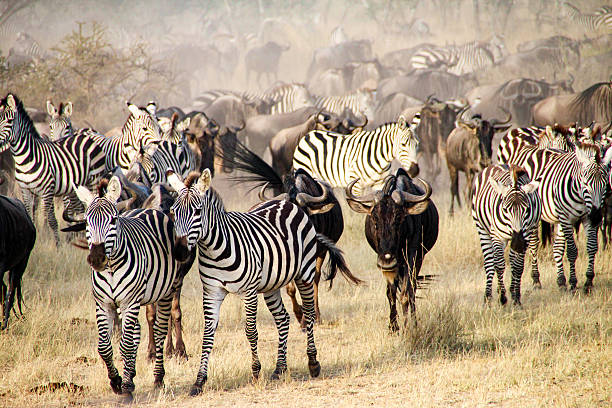
The Great Wildebeest Migration is widely regarded as the largest terrestrial animal movement on Earth, involving over 1.5 million wildebeest, along with approximately 200,000 zebras and hundreds of thousands of gazelles moving together in a continuous circular route across East Africa.
This extraordinary natural event takes place primarily within the ecosystem of Serengeti National Park and extends into Masai Mara National Reserve. It is not a one-time journey, but rather a year-round survival cycle driven by one powerful force: rainfall and fresh grazing land.
Unlike migrations in other parts of the world that follow a simple seasonal direction, the wildebeest migration is dynamic, unpredictable, and circular. The herds are constantly moving in search of greener pastures, meaning their location changes throughout the year depending on rainfall patterns.
A Natural Survival System, Not a Planned Journey
At its core, the migration is not guided by leaders or fixed routes it is driven by instinct and survival. Wildebeest are highly sensitive to rain and grass growth. When rainfall begins in one region, fresh grass quickly grows, attracting the herds. Once that area is exhausted, they move again.
This creates a continuous loop:
Southern Serengeti (calving season)
Central Serengeti (movement and grazing)
Western Corridor (river crossings)
Northern Serengeti & Maasai Mara (peak crossings)
Return south again with short rains
This cycle has continued for thousands of years, making it one of the most stable yet dynamic wildlife systems on the planet.
Why This Migration Exists
The migration exists because of a simple ecological balance:
The Serengeti ecosystem receives seasonal rainfall patterns
Rainfall determines where fresh grass grows
Wildebeest must constantly follow this fresh grazing
Predators follow the herds, creating a complete food chain cycle
This makes the migration not just a movement of animals, but a full ecosystem in motion, involving predators, prey, and the environment working together.
Survival Under Extreme Pressure
The journey is not easy or safe. Each year, thousands of animals are lost due to:
River crossings filled with crocodiles (especially at the Mara River)
Predators such as lions, cheetahs, and hyenas
Exhaustion and lack of food during long movements
Despite these dangers, the migration continues because it is essential for survival and reproduction.
Why It Matters for Travelers
For safari travelers, the Great Wildebeest Migration is one of the most spectacular wildlife experiences in the world, but it is also one of the most misunderstood.
Many visitors expect the migration to happen in one place at one time but in reality, it is constantly moving. This is why timing, location, and expert planning are critical.
With proper guidance from JoyTrekking Tours & Safaris as Experienced Tour Operator, travelers can position themselves at the right place and time to witness:
Dramatic river crossings
Predator hunting scenes
Massive herd movements across open plains
The Bigger Picture
The Great Wildebeest Migration is more than a wildlife event it is a living system of survival, movement, and balance that defines the entire Serengeti ecosystem.
It represents:
The raw power of nature
The connection between climate and wildlife
One of the last untouched natural cycles on Earth
For many travelers, witnessing it is not just a safari it is a life-changing experience that reveals nature at its most authentic and powerful form.
Great Wildebeest Migration Guide 2026 – Monthly Breakdown
December – March (Calving Season)
Location: Southern Serengeti
Over 500,000 calves born in a few weeks
High predator activity (lions, hyenas, cheetahs)
Best for: Photography, predator action, baby animals
April – May (Long Rains)
Herds spread across central Serengeti
Fewer crowds, lush green landscapes
Movement becomes unpredictable
Best for: Budget safaris, scenic photography
June – July (Grumeti River Crossings)
Herds move westward
First major river crossings begin
Crocodile encounters at peak
Best for: Early dramatic crossings
August – October (Mara River Crossings)
This is the most famous stage of the migration.
Massive crossings at Mara River
Dangerous crocodile-infested waters
Peak safari season
Best for: Iconic wildlife documentaries, river crossing action
November (Return Journey)
Herds move back south
Short rains begin
Movement becomes scattered again
Best for: Quiet safari experience
Where to See the Great Wildebeest Migration
The Great Wildebeest Migration moves across a vast ecosystem but there are key locations where travelers can reliably witness its most dramatic moments. Each park and region offers a different experience from river crossings to calving season and predator action.
Understanding these destinations helps you plan the perfect safari in Serengeti National Park and beyond.
Serengeti National Park (Tanzania) – The Heart of the Migration
Serengeti National Park is the central stage of the entire migration cycle and arguably the most important wildlife ecosystem in Africa. Covering approximately 14,750 square kilometers, it is a UNESCO World Heritage Site famous for its endless plains, rich biodiversity, and year-round wildlife viewing.
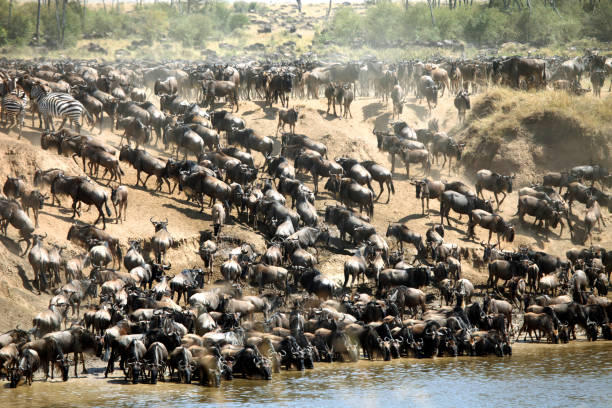
Millions of wildebeest moving across the endless plains of Serengeti National Park during the Great Migration—one of the most spectacular wildlife events on Earth.
Key Features:
Vast open savannah plains ideal for large herds
Home to over 1.5 million wildebeest and thousands of predators
One of the best places for year-round safari experiences
Incredible photography opportunities with dramatic landscapes
Migration Highlights:
December – March: Calving season in southern Serengeti
April – June: Herd movement through central and western corridors
July – October: Northern Serengeti river crossings
Why It Stands Out:
Serengeti is the only park where you can experience all stages of the migration cycle within one ecosystem, making it the most complete safari destination in Africa.
Masai Mara National Reserve (Kenya) – The River Crossing Stage
Masai Mara National Reserve is the northern extension of the Serengeti ecosystem and is world-famous for its dramatic river crossings and predator interactions.
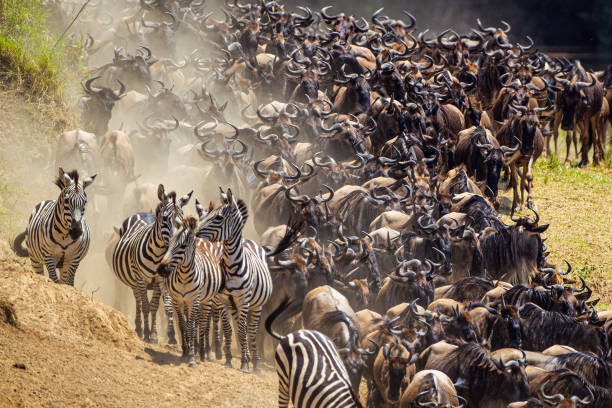
Blue wildebeest crossing the Mara River in Masai Mara National Reserve—a dramatic and high-risk moment during the Great Migration.
Key Features:
Rolling savannah hills and acacia-dotted landscapes
High density of big cats (lions, leopards, cheetahs)
Smaller area but very high wildlife concentration
Iconic photographic safari destination
Migration Highlights:
July – October: Peak river crossings at the Mara River
Massive herds crossing crocodile-infested waters
Intense predator-prey interactions
Why It Stands Out:
This is the most dramatic and action-packed stage of the migration. Visitors often witness life-and-death river crossings, making it one of the most emotionally powerful safari experiences in the world.
Grumeti Game Reserve (Western Serengeti Corridor) – Hidden Crossing Zone
The Western Corridor of Serengeti National Park includes the Grumeti region a less crowded but highly strategic migration route.
Key Features:
Remote and exclusive safari experience
Dense riverine forests and open plains
Luxury safari lodges with private concessions
Lower tourist density compared to central Serengeti
Migration Highlights:
May – July: First major river crossings at the Grumeti River
Large crocodile populations waiting for herds
Early migration movement before reaching the north
Why It Stands Out:
Grumeti offers a more private and exclusive migration experience ideal for travelers seeking luxury safaris away from crowds while still witnessing river crossings.
Ndutu Area (Southern Serengeti – Ngorongoro Border) – Calving Season Hotspot
The Ndutu region lies between Serengeti National Park and the Ngorongoro Conservation Area. It is one of the most important breeding grounds for wildebeest.
Key Features:
Flat, short-grass plains ideal for newborn calves
High predator density (lions, hyenas, cheetahs)
Excellent visibility for wildlife photography
Seasonal wetlands attracting large herds
Migration Highlights:
January – March: Peak calving season
Over 500,000 calves born in just a few weeks
Intense predator activity targeting young calves
Why It Stands Out:
Ndutu offers a raw and emotional wildlife experience, showcasing the beginning of life and the harsh realities of survival in the wild.
Northern Serengeti – Ultimate River Crossing Territory
Northern Serengeti is the final stage before herds enter the Maasai Mara ecosystem.
Key Features:
Remote and less crowded safari area
Hilly terrain with river valleys
Exclusive safari camps and lodges
High chance of uninterrupted wildlife viewing
Migration Highlights:
July – October: Peak Mara River crossings
Large herds gathering before crossing
Intense predator activity and dramatic scenes
Why It Stands Out:
This region is considered the best place in Tanzania to witness the famous Mara River crossings without crossing into Kenya.
Essential travel items for a successful migration safari packing smart ensures comfort and the best wildlife viewing experience during the Great Wildebeest Migration.
Lightweight safari clothing (neutral colors)
Binoculars
Camera with zoom lens
Sunscreen & hat
Comfortable walking shoes
Power bank
Light jacket (cool mornings)
Frequently Asked Questions
What is the best time to see the river crossing?
August to October in Northern Serengeti near the Mara River.
Is the migration predictable?
Yes and no. It follows rainfall patterns but exact timing varies yearly.
Can I see the migration all year?
Yes. The herds move continuously across Serengeti ecosystem.
Is it safe to visit during migration?
Yes, with professional guides and reputable operators.
Do I need a private safari?
Not necessary, but private safaris offer more flexibility.
Customer Testimonial
Ryan Day2024.10.13
Amazing company defiantly would recommend to anyone not sure about who to go with.
Ready to Witness the Great Wildebeest Migration?
Experience Africa’s most powerful wildlife event with expert guided safaris.
WhatsApp Us Now for Safari Planning Book Your Migration Safari Today
The Great Wildebeest Migration is more than a safari it is one of the last great natural spectacles on Earth.
Understanding when and where to go transforms your experience from luck to certainty.
With the right planning and expert guidance from JoyTrekking Tours & Safaris, you don’t just watch the migration you experience it at its most powerful moment.
About the Author
January Mziray is a Tanzania safari expert and travel consultant at JoyTrekking Tours & Safaris. With deep experience in East African wildlife tourism, he specializes in designing safari experiences across Serengeti National Park, Kilimanjaro expeditions and Zanzibar beach holidays for international travelers.