Discover the authentic Lake Eyasi Cultural Experience in Tanzania and meet the Hadzabe and Datoga tribes in 2026. Learn about their traditions, lifestyle, and how to plan an unforgettable cultural safari.
Excerpt
Step beyond traditional wildlife safaris and immerse yourself in a rare cultural journey at Lake Eyasi. This guide explores how you can meet the Hadzabe bushmen and Datoga blacksmiths while experiencing one of Tanzania’s most authentic tribal encounters.
Quick Facts Summary
Location: Lake Eyasi, Northern Tanzania
Best Time to Visit: June – October & December – February
Main Tribes: Hadzabe (hunter-gatherers), Datoga (pastoralists & blacksmiths)
Experience Duration: Half-day to full-day tour
Activities: Hunting with Hadzabe, cultural exchange, blacksmith demonstrations
Accessibility: 3–4 hours drive from Ngorongoro or Karatu
Ideal For: Cultural travelers, photographers, anthropologists, safari add-ons
Introduction: From Lake Manyara’s Forest Canopy to Lake Eyasi’s Ancient Cultures
Your journey to the Lake Eyasi Cultural Experience often begins in one of Tanzania’s most underrated yet breathtaking destinations Lake Manyara National Park.
Nestled at the base of the Great Rift Valley escarpment, Lake Manyara offers a completely different atmosphere from the open plains of the Serengeti. Here lush groundwater forests, flamingo-filled lake shores, and tree-climbing lions create a rich and diverse ecosystem within a relatively compact area.
But beyond its beauty, Lake Manyara plays an important strategic role in your itinerary.
Why Lake Manyara Matters Before Visiting Lake Eyasi
Geographical Gateway: Lake Manyara is located just a short drive from Karatu, which is the main access point to Lake Eyasi. This makes it a natural stopover before heading into cultural territories.
Acclimatization to Northern Tanzania: After arrival in Arusha, Manyara offers a gentle introduction to Tanzania’s landscapes, climate, and safari rhythm.
Wildlife + Culture Combination: While Lake Manyara delivers classic safari experiences elephants, hippos, and birdlife Lake Eyasi complements it with deep human interaction. Together, they create a balanced travel experience.
What Most Travelers Miss
Many itineraries treat Lake Manyara as just a quick game drive stop. However, skipping its deeper value means missing:
The transition from wildlife ecosystems to human heritage
The connection between environment and traditional lifestyles
A smoother, more logical travel route to Lake Eyasi
Problem: Travelers often rush from Serengeti to Ngorongoro, overlooking Lake Manyara and the cultural depth of nearby regions.
Solution: Use Lake Manyara as a bridge both geographically and experientially before heading to Lake Eyasi.
Trust: JoyTrekking Tours & Safaris design itineraries that integrate Manyara and Eyasi seamlessly for maximum value.
Action: Plan your route to include Lake Manyara as more than a stop make it the beginning of your cultural story.
From the shaded forest trails of Lake Manyara to the open, raw landscapes of Lake Eyasi, your journey transforms from observing wildlife to connecting with some of the last traditional tribes on Earth.
And that’s where the real story begins.
Why Choose a Lake Eyasi Cultural Experience
A Rare Cultural Encounter
Unlike staged cultural villages, Lake Eyasi offers genuine, unscripted interactions. The Hadzabe people do not perform for tourists they simply allow visitors to observe and respectfully participate in their daily life.
Off-the-Beaten-Path Destination
Located southwest of Ngorongoro, Lake Eyasi remains untouched by mass tourism. This means fewer crowds and a more intimate experience.
Deep Human Connection
You’ll learn not just about the tribes but from them. Through gestures, shared activities, and translation, stories come alive.
Meet the Hadzabe Tribe: Tanzania’s Last Hunter-Gatherers
Who Are the Hadzabe?
The Hadzabe (or Hadza) are among the last remaining hunter-gatherer communities in Africa, living around the Lake Eyasi basin in northern Tanzania. With an estimated population of fewer than 1,500 individuals, they represent one of the oldest continuous human cultures on Earth.
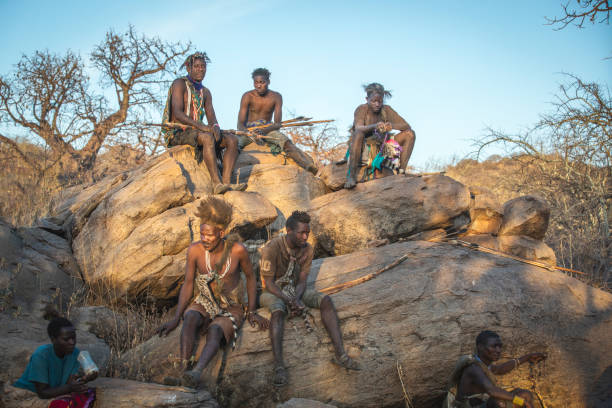
Hadzabe men resting on rocks in the evening sun after a long hunting day near Lake Eyasi, showcasing their traditional hunter-gatherer lifestyle.
Unlike many indigenous groups, the Hadzabe have maintained their traditional way of life with minimal reliance on agriculture or modern systems. Their social structure is egalitarian, their movements are seasonal and their survival is closely tied to the natural environment.
A Unique Language and Identity
The Hadzabe speak a distinctive click-based language, unrelated to neighboring tribes. This linguistic uniqueness reflects their long-standing cultural independence and deep historical roots in the region.
Their identity is shaped not by material wealth, but by:
Knowledge of the land
Hunting skill
Social cooperation
Oral traditions passed through generations
Daily Life and Survival Skills
The Hadzabe lifestyle is centered around sustainability and adaptability.
Key Aspects of Daily Life:
Hunting: Men use handmade bows and poison-tipped arrows to hunt small to medium-sized animals
Gathering: Women collect berries, baobab fruit, tubers, and wild honey
Shelter: Temporary huts made from grass and branches
Diet: Entirely based on natural, foraged, and hunted food
Their intimate knowledge of the ecosystem allows them to live in harmony with nature without depleting resources.
The Hunting Experience: A Rare Opportunity
One of the most powerful elements of the Lake Eyasi Cultural Experience is participating in an early morning hunting excursion with the Hadzabe.
Accompanied by a local guide and translator, visitors can:
Track animal footprints
Learn how to use traditional hunting tools
Observe real-time decision-making in the wild
Understand survival strategies developed over thousands of years
This is not a staged activity it is a genuine glimpse into daily life.
Cultural Values and Social Structure
The Hadzabe society operates on principles that differ significantly from modern systems:
Egalitarianism: No formal hierarchy or leadership structure
Resource Sharing: Food and resources are shared within the group
Minimalism: Limited material possessions
Mobility: Camps shift based on resource availability
These values highlight a lifestyle centered on balance, cooperation and sustainability.
Responsible and Ethical Visits
Due to their unique way of life, visiting the Hadzabe requires a thoughtful and respectful approach.
Interactions are culturally sensitive and non-intrusive
Community consent is prioritized
Tourism contributes positively to local livelihoods
Visitors are encouraged to engage with curiosity while respecting boundaries, traditions, and privacy.
Why the Hadzabe Experience Matters
Meeting the Hadzabe is more than a cultural activity it is an encounter with a way of life that challenges modern assumptions about survival, community and happiness.
The Hadzabe are not just a tribe to observe they are a living connection to humanity’s earliest traditions. Experiencing their world, even briefly, offers insight that few travel experiences can match.
Meet the Datoga Tribe: Masters of Metal
Who Are the Datoga?
The Datoga tribe is one of Tanzania’s most culturally rich and historically resilient communities, primarily residing in the Lake Eyasi region. Known for their pastoral lifestyle and exceptional craftsmanship the Datoga have preserved their traditions despite external influences and modernization.
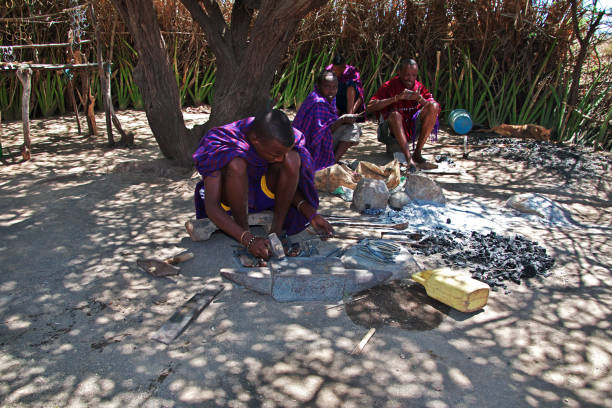
A glimpse into daily life within a traditional Datoga village near Lake Eyasi, highlighting their cultural heritage and community lifestyle.
They are believed to have Nilotic origins and have lived in northern Tanzania for centuries often coexisting alongside the Hadzabe tribe. Their identity is deeply rooted in livestock keeping social structure and artisanal skill.
Traditional Blacksmithing: A Living Heritage
The Datoga are widely recognized as master blacksmiths a skill that is both practical and symbolic within their society.
Using simple locally made tools and recycled metals, they produce:
Arrowheads used by the Hadzabe hunters
Knives and farming tools
Bracelets, necklaces, and decorative items
Visitors to Lake Eyasi have the opportunity to observe this process firsthand an experience that highlights both technical skill and cultural continuity. The blacksmithing practice is not only a source of livelihood but also a key element of Datoga identity passed down through generations.
Distinct Cultural Identity
The Datoga maintain a strong and visible cultural identity, expressed through:
Traditional facial markings (scarification): Symbolizing beauty, maturity, and tribal belonging
Handcrafted beadwork: Often worn by women and used to signify social status
Traditional attire: Made from animal hides and adorned with metal accessories
Their way of life reflects a deep connection to heritage, community values and ancestral knowledge systems.
Role in the Lake Eyasi Cultural Experience
Within the broader Lake Eyasi Cultural Experience, visiting the Datoga community provides an important contrast and complement to the Hadzabe tribe.
While the Hadzabe represent a hunter-gatherer lifestyle, the Datoga demonstrate:
Settled community structures
Skilled craftsmanship and trade
Livestock-based economy
This combination offers travelers a comprehensive understanding of human adaptation and cultural diversity in the region.
Responsible Cultural Engagement
Engaging with the Datoga community should always be approached with respect and awareness. Professional operators such as JoyTrekking Tours & Safaris ensure that:
Visits are conducted ethically
Local communities benefit directly from tourism
Cultural practices are preserved and respected
Travelers are encouraged to ask questions, observe attentively and participate respectfully creating a meaningful and mutually enriching experience.
The Datoga are not just artisans they are custodians of a living tradition. Meeting them adds depth, context, and authenticity to your journey through Lake Eyasi, making your cultural experience both educational and unforgettable.
Lake Eyasi Cultural Experience vs Traditional Safari
Feature
Lake Eyasi Cultural Experience
Traditional Safari
Focus
People & Culture
Wildlife
Interaction
High (hands-on)
Low (observation)
Crowds
Low
Medium to High
Learning Depth
Cultural immersion
Nature-focused
Unique Factor
Rare human connection
Iconic animals
Cost Breakdown of Lake Eyasi Experience
Understanding costs helps you plan better and avoid surprises.
Typical Cost Per Person (USD)
Transport (from Karatu/Ngorongoro): $50 – $150
Guide Fees: $30 – $80
Tribal Fees (Hadzabe & Datoga): $20 – $50
Total Estimated Cost: $100 – $250 per person (depending on group size)
What’s Included
Local guide/translator
Village access fees
Cultural activities
What’s Not Included
Tips
Accommodation
Personal expenses
Packing List for Lake Eyasi Cultural Tour
To fully enjoy your experience, pack smart:
Essentials
Lightweight clothing (neutral colors)
Comfortable walking shoes
Hat & sunglasses
Sunscreen
Optional but Recommended
Camera (with respect for permission)
Small gifts (consult your guide first)
Reusable water bottle
Best Time to Visit Lake Eyasi
Planning the right travel period is essential to fully enjoy the Lake Eyasi Cultural Experience, as seasonal conditions directly influence accessibility, activities, and overall quality of interaction with the Hadzabe and Datoga tribes.
Dry Season (June – October): Peak Cultural Experience
This is widely considered the best time to visit Lake Eyasi.
Vegetation is thinner, making it easier to track wildlife during Hadzabe hunting excursions
Roads are dry and easily accessible
Weather is cool and comfortable for walking tours
Higher success rate in witnessing real hunting activities
Recommended for: First-time visitors, photographers, and cultural enthusiasts seeking the most immersive experience
Short Dry Season (January – February): Balanced Option
A secondary but excellent travel window.
Warm temperatures with relatively dry conditions
Fewer tourists compared to peak season
Good opportunities for cultural interaction and photography
Recommended for: Travelers looking for a quieter, more exclusive experience
Rainy Season (March – May & November): Limited but Possible
Travel during this period is possible but comes with challenges.
Roads may become muddy and difficult to navigate
Hunting activities are less predictable
Landscape becomes greener, offering a different visual appeal
Recommended for: Experienced travelers or those combining with low-season safari deals in Serengeti National Park
Professional Insight
For a well-rounded Northern Circuit itinerary, many travel experts recommend combining a Lake Eyasi visit during the dry season with nearby destinations such as Lake Manyara National Park and Ngorongoro Crater. This ensures optimal road conditions, better wildlife visibility and a seamless travel experience.
Summary Recommendation
Best Overall: June – October
Best Alternative: January – February
Budget/Low Season: March – May (with flexibility required)
Choosing the right season ensures that your Lake Eyasi Cultural Experience is not only enjoyable but also authentic, comfortable and logistically smooth.
Customer Testimonial
Ryan Day2024.10.13
Amazing company defiantly would recommend to anyone not sure about who to go with.
How to Combine Lake Eyasi with Your Tanzania Trip
Lake Eyasi fits perfectly into Northern Circuit itineraries:
Serengeti Safari
Ngorongoro Crater
Tarangire National Park
Kilimanjaro Trekking
Zanzibar Beach Holiday
This makes it ideal for travelers seeking both adventure and relaxation.
Frequently Asked Questions About Lake Eyasi Cultural Experience
Is it ethical to visit the Hadzabe tribe?
Yes, when done through responsible operators who respect their autonomy and traditions.
How long should I spend at Lake Eyasi?
A half-day is sufficient, but a full day offers deeper immersion.
Is it safe?
Yes, with a professional guide. The tribes are welcoming and peaceful.
Can children participate?
Yes, but the experience is more suitable for older children who can appreciate cultural learning.
Start Planning Your Lake Eyasi Cultural Experience Today
Transform your Tanzania journey into something truly meaningful by adding the Lake Eyasi Cultural Experience to your itinerary. Whether you are combining it with a wildlife safari in Serengeti National Park, exploring the beauty of Ngorongoro Crater, or relaxing on the beaches of Zanzibar, this cultural encounter adds depth and authenticity to your travel experience.
At JoyTrekking Tours & Safaris, we design personalized, ethically guided cultural tours that prioritize genuine interaction, local respect, and unforgettable memories.
Tailor-made itineraries Local expert guides Responsible cultural tourism
Book your 2026 travel dates today and experience Tanzania beyond the ordinary.
Final Thoughts
The Lake Eyasi Cultural Experience stands as one of Tanzania’s most profound and authentic travel opportunities offering far more than a typical addition to a safari itinerary. It is a rare chance to engage directly with living cultures that have preserved their traditions for thousands of years.
In an era where many travel experiences are curated and commercialized, Lake Eyasi remains remarkably genuine. The interactions with the Hadzabe and Datoga communities are not performances but real moments of cultural exchange grounded in respect, curiosity and shared humanity.
For international travelers seeking depth, meaning and a more holistic understanding of Tanzania integrating this experience into your journey is not just recommended it is essential. When combined with iconic destinations such as Serengeti National Park or Ngorongoro Crater, Lake Eyasi adds a powerful human dimension that transforms a great trip into an unforgettable one.
Ultimately the value of the Lake Eyasi Cultural Experience lies not only in what you see but in what you learn, feel and carry with you long after your journey ends.
For those ready to move beyond observation and into meaningful connection, Lake Eyasi offers an experience that is both timeless and deeply impactful.
About the Author
January Mziray January Mziray is a Tanzanian travel specialist and the founder of JoyTrekking Tours & Safaris, a locally owned company dedicated to delivering authentic and responsible travel experiences across Tanzania. With extensive hands on experience in guiding safaris, cultural tours, and mountain expeditions, January brings deep local insight into every itinerary.
Born and raised in Tanzania, he has built strong relationships with local communities, including the Hadzabe and Datoga tribes around Lake Eyasi. His approach to tourism emphasizes ethical travel, cultural respect, and meaningful connections between visitors and local people.
Through his work, January aims to go beyond traditional safari experiences by helping travelers discover the human stories behind Tanzania’s landscapes from the plains of the Serengeti to the cultural heartlands of Lake Eyasi and beyond.
When he’s not organizing tours, January shares travel knowledge through blogs, helping international visitors plan well-informed, enriching journeys throughout Tanzania.