Discover the breathtaking beauty of Lake Manyara National Park in Tanzania home to pink flamingos, tree-climbing lions, and rich wildlife diversity. This ultimate 2026 safari guide by JoyTrekking Tours & Safaris covers everything international travelers need: best time to visit, costs, activities, accommodation, and expert travel tips for an unforgettable Tanzania safari experience.
Whether you’re planning a wildlife safari, Kilimanjaro adventure, or a relaxing Zanzibar beach escape, Lake Manyara is the perfect starting point for your Tanzania tourism journey.
Explore Lake Manyara National Park, one of Tanzania’s most scenic safari destinations famous for flamingos and rare tree-climbing lions. This guide helps you plan a perfect safari with expert insights, costs, and travel tips.
Quick Facts Summary
Location: Northern Tanzania (Great Rift Valley)
Famous for: Tree-climbing lions & elephants
Highlight: Flamingos on Lake Manyara shores
Best time to visit: June – October (dry season)
Distance from Arusha: ~2 hours drive
Ecosystem: Forest, savannah, and lake habitat
Size: ~330 sq km
Managed by: TANAPA (Tanzania National Parks Authority)
Introduction
Many travelers who dream of an African safari often imagine endless savannahs, large elephant herds, and dramatic wildlife encounters. But when they start planning their Tanzania journey, a common question always appears: where should I begin to truly feel the magic of Tanzania without feeling overwhelmed by distance, cost, or logistics?
Located at the base of the Great Rift Valley escarpment, Lake Manyara National Park is one of Tanzania’s most naturally diverse and visually striking safari destinations. The moment you enter the park, the landscape shifts dramatically from lush groundwater forests filled with towering mahogany and fig trees, to open grassy plains, and finally to the shimmering alkaline lake that stretches toward the horizon.
Unlike larger and more remote parks, Lake Manyara offers something rare: a compact safari experience where wildlife, scenery, and accessibility come together in one place. This makes it especially attractive for international travelers who may be combining multiple destinations such as Serengeti, Ngorongoro Crater, Kilimanjaro trekking, or even a relaxing Zanzibar beach holiday.
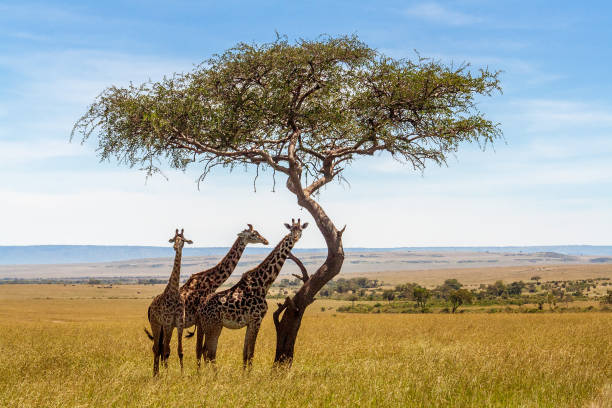
What makes Lake Manyara truly unforgettable is its unexpected diversity within a small area. In a single game drive, you can witness elephants walking silently through dense forest, troops of baboons crossing the road in large groups, giraffes feeding gracefully on acacia trees, and hippos resting in swampy pools. Then, as you approach the lake shore, the scenery transforms into a vast, shimmering wetland filled with flamingos, pelicans, and other migratory birds.
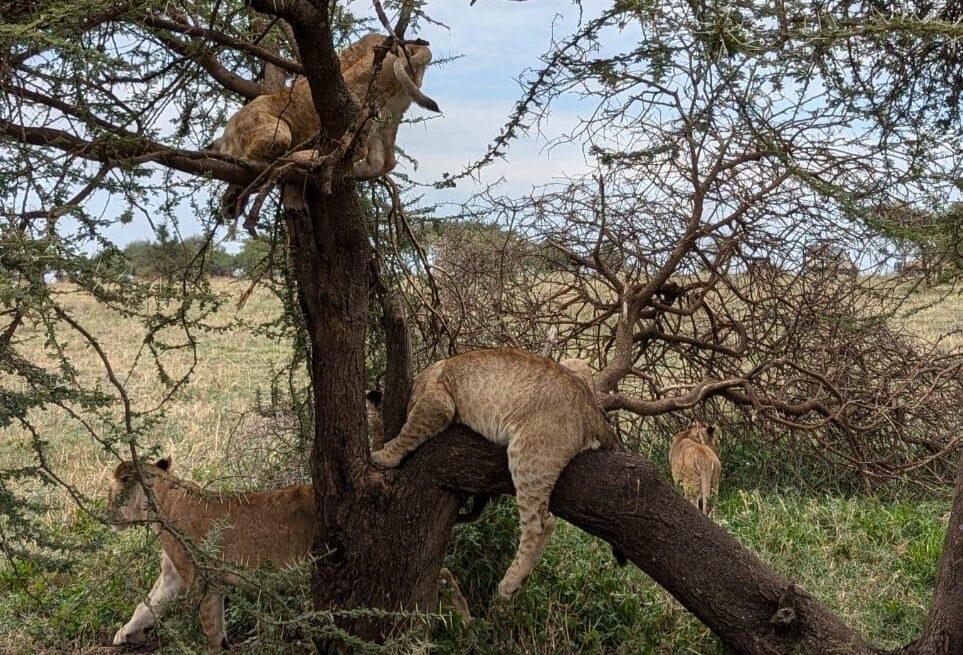
But perhaps the most iconic and surprising highlight of all is the presence of tree-climbing lions a rare behavior seen in only a few places in Africa. Seeing a lion resting lazily on an acacia branch while scanning the plains below is one of those safari moments that feels almost unreal, yet it is a regular occurrence in Lake Manyara.
From a travel perspective, the park is also one of the most accessible safari destinations in northern Tanzania, located only about two hours from Arusha. This convenience makes it an ideal introduction to Tanzania’s northern safari circuit, especially for first-time visitors who want a rich wildlife experience without long driving distances.
At JoyTrekking Tours & Safaris, we often recommend Lake Manyara as a “first taste of Tanzania” because it sets the emotional tone for the entire safari journey. It is not just about seeing animals it is about experiencing how nature, culture, and landscape blend seamlessly into one unforgettable environment.
For travelers who are planning a broader East African adventure whether climbingMount Kilimanjaro, exploring the wildlife-rich plains of the Serengeti, or ending their trip on the white-sand beaches of Zanzibar Lake Manyara serves as the perfect opening chapter.
It is a place where you don’t just observe wildlife you feel immersed in it.
Overview of Lake Manyara National Park Safari Experience
Lake Manyara National Park is one of Tanzania’s most visually stunning safari destinations. Located along the Great Rift Valley escarpment, the park combines lush forests, open grasslands, and alkaline lake ecosystems.
Unlike larger parks such as Serengeti, Lake Manyara offers a short but highly rewarding safari experience, making it perfect for travelers with limited time.
Why it stands out:
High wildlife density in a compact area
Incredible birdlife diversity (over 400 species)
Unique tree-climbing lions
Scenic landscapes perfect for photography
Flamingos – The Pink Magic of Lake Manyara
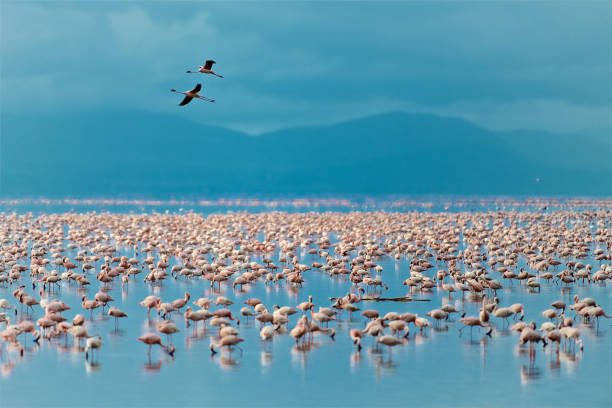
One of the most unforgettable sights in Lake Manyara National Park Safari is the vast, shifting carpet of pink created by thousands of flamingos feeding along the lake’s shoreline. For many visitors, this is the moment that defines their entire Tanzania safari experience.
Thousands of pink flamingos gather along the shores of Lake Manyara, creating one of the most iconic wildlife scenes in Tanzania.This image showcases a stunning flock of flamingos feeding along the alkaline shores of Lake Manyara National Park in Tanzania. Known for attracting thousands of flamingos, the lake provides the perfect habitat rich in algae that sustains these elegant birds. A highlight of any Lake Manyara National Park Safari, this natural spectacle offers breathtaking views and unforgettable photography opportunities for travelers exploring Tanzania’s northern safari circuit.
Lake Manyara is part of the larger Rift Valley alkaline lake system, meaning its waters contain high levels of salt and minerals. These conditions may seem harsh at first glance, but they create the perfect environment for microscopic algae known as spirulina to thrive. This algae is the primary food source for flamingos, and it is the reason why these elegant birds gather here in such large numbers.
Why Flamingos Choose Lake Manyara
Flamingos are highly migratory birds, moving across East Africa in search of ideal feeding and breeding grounds. Lake Manyara becomes a seasonal paradise for them because:
Depending on the season and water levels, visitors may see thousands to sometimes hundreds of thousands of flamingos spread across the lake, creating a breathtaking pink horizon that stretches as far as the eye can see.
A Living, Moving Landscape
What makes flamingos in Lake Manyara so special is that they are never still. The flocks constantly shift, turning the lake into a living, moving artwork. From a distance, they appear like a soft pink mist over the water, but as you approach, you begin to notice their synchronized movement, graceful feeding behavior, and quiet social interaction.
There are two main species you may encounter:
Lesser Flamingos (smaller, more numerous, bright pink)
Greater Flamingos (taller, paler pink, more scattered)
Each species plays a role in the lake’s ecosystem, feeding at different depths and contributing to the delicate ecological balance of the wetland.
Best Time to Witness the Flamingo Spectacle
The visibility and concentration of flamingos depend heavily on water levels and seasonal changes:
Dry Season (June – October): Best time for dense flamingo gatherings as water levels drop and feeding areas concentrate.
Wet Season (November – May): Flamingos may spread out across different Rift Valley lakes, but bird diversity increases significantly.
Early morning and late afternoon are the most magical times to observe them, as the soft sunlight enhances the pink coloration and creates perfect photography conditions.
Photography and Viewing Experience
For photographers and nature lovers, Lake Manyara offers one of the most dramatic bird photography scenes in Africa. The contrast between:
Pink flamingos
Blue-green alkaline water
Golden Rift Valley light creates world-class imagery opportunities.
A zoom lens (200mm–400mm recommended) is highly useful, as flamingos often stay at a distance from the main road viewpoints. Quiet observation is key sudden movement or noise can cause the flocks to shift further into the lake.
Ecological Importance of Flamingos
Beyond their beauty, flamingos play an important role in the ecosystem of Lake Manyara. By feeding on algae, they help regulate water quality and maintain ecological balance within the lake system. Their presence is also an indicator of environmental health, making them a key species for conservation monitoring by organizations such as the Tanzania National Parks Authority.
A Moment That Defines the Safari
For many international travelers, seeing flamingos at Lake Manyara is not just a wildlife encounter it is an emotional moment. The combination of color, silence, and vast natural space creates a feeling of peace that is difficult to describe.
It is often the point where visitors realize that a Tanzania safari is not just about animals it is about witnessing nature in its purest, most artistic form.
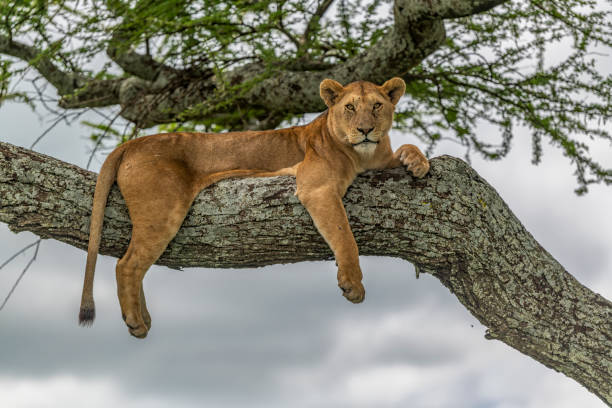
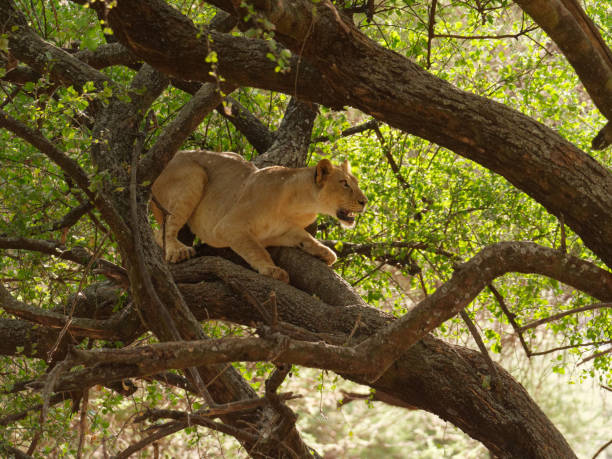
A lioness rests calmly on a tree branch in Lake Manyara National Park, showcasing the park’s rare tree-climbing lion behavior.
Among all the wildlife experiences in Lake Manyara National Park Safari, nothing captures visitors’ attention quite like the mysterious behavior of tree-climbing lions. This rare phenomenon transforms an already beautiful safari into something truly extraordinary almost surreal.
In most parts of Africa, lions are strictly ground-dwelling predators. They rest on the grasslands, hunt in open plains, and rarely climb trees. However, in Lake Manyara, a unique population of lions has developed the unusual habit of spending long hours resting on the branches of acacia and sausage trees, often several meters above the ground.
For many first-time visitors, seeing a fully grown lion stretched across a tree branch feels like a scene from a wildlife documentary but here, it is a real and repeated experience.
Why Do Lions Climb Trees in Lake Manyara?
Scientists and wildlife researchers have studied this behavior for years, and while there is no single confirmed explanation, several strong theories exist:
Escape from ground heat: Lake Manyara can become very hot during the dry season, and tree branches offer cooler airflow and shade.
Avoiding biting insects: Tsetse flies and other insects are common on the ground, and climbing trees helps lions avoid irritation.
Better vantage point: From above, lions can observe prey movement across the plains and wetlands.
Territorial comfort behavior: Some researchers believe this is a learned behavior passed through generations within this specific lion population.
What makes this even more fascinating is that not all lions in Africa do this this behavior is extremely rare and mainly associated with Lake Manyara and a few other isolated regions in East Africa.
Where and When to Spot Tree-Climbing Lions
Tree-climbing lions are not guaranteed on every safari, but your chances improve significantly with the right timing and guidance.
Best conditions for sightings:
Dry season (June to October)
Hot midday hours when lions seek shade
Quiet forest-edge areas near the park’s groundwater forest
Acacia-dominated zones inside the park
Because lions are territorial and mobile, professional tracking by experienced guides is essential. This is why safaris with operators like JoyTrekking Tours & Safarisgreatly increase your chances of successful sightings.
A Photographer’s Dream Encounter
For wildlife photographers, tree-climbing lions are one of the most valuable subjects in East African safari photography. The visual contrast is powerful:
Golden lion fur against green foliage
Blue skies framed by tree branches
Relaxed, almost “cat-like” poses rarely seen in ground lions
Capturing this moment requires patience, a zoom lens, and silence. Often, lions remain in trees for hours, giving visitors time to observe natural behavior such as grooming, sleeping, or scanning the landscape below.
Behavior and Social Structure
Tree-climbing lions in Lake Manyara are usually seen in small groups or pride members resting together. Unlike aggressive hunting scenes often associated with lions, these encounters are calm and peaceful.
You may observe:
Cubs playing on lower branches
Adult females resting in shade
Males lying across thick branches with relaxed posture
This behavior gives a rare emotional perspective of lions not just as predators, but as intelligent animals adapting to their environment.
Conservation Importance
The presence of tree-climbing lions also highlights the ecological richness of Lake Manyara. Protecting their habitat ensures the survival of this unique behavioral trait.
The park is managed under strict conservation efforts by the Tanzania National Parks Authority, which works to protect both wildlife and their natural ecosystems from human pressure and environmental change.
An Experience You Never Forget
Seeing a lion in a tree is not just another safari moment it is a memory that stays with travelers for life. Many visitors describe it as unexpected, almost dreamlike, because it challenges what they thought they knew about lion behavior.
At JoyTrekking Tours & Safaris, our guides are trained to track these lions carefully and position guests safely for the best possible viewing experience, ensuring you don’t just visit Lake Manyara you truly experience its most iconic wonder.
Wildlife You Can Expect to See
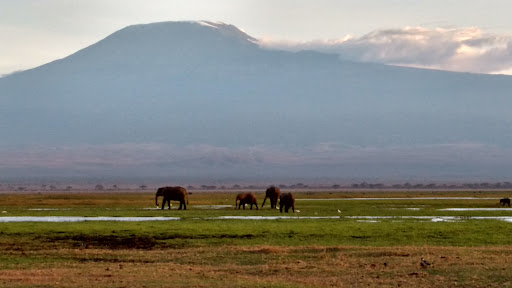
Elephants (large herds)
Buffaloes
Zebras
Giraffes
Hippos
Baboons (very common)
Flamingos and pelicans
Best Time to Visit Lake Manyara National Park
Dry Season (June – October)
Best wildlife visibility
Animals gather around water sources
Easier game drives
Wet Season (November – May)
Beautiful green scenery
Fewer tourists
Excellent birdwatching season
Activities in Lake Manyara National Park
Game drives (morning & evening)
Bird watching
Canoeing (seasonal availability)
Cultural visits to nearby Maasai villages
Photography safaris
How to Get to Lake Manyara
From Arusha: ~2 hours drive
From Ngorongoro: ~1 hour drive
From Serengeti: via southern circuit route
Most tours are arranged through professional operators like JoyTrekking Tours & Safaris, ensuring comfort and safety.
Lake Manyara National Park is not just a safari destination it is a complete introduction to Tanzania’s natural beauty. From flamingo-filled lakes to rare tree-climbing lions, every moment feels like a real-life documentary.
If you are planning your Tanzania tourism journey, this park is the perfect first chapter before exploring Serengeti or relaxing in Zanzibar.
About the Author
January Mziray is a Tanzania-based travel writer and safari consultant with extensive experience in East African tourism. He works closely with JoyTrekking Tours & Safaris to design authentic travel experiences for international visitors exploring Tanzania’s national parks, Kilimanjaro, and Zanzibar.