Discover the best time to visit Tanzania for safari. Learn about Tanzania safari seasons, including the ideal months for Serengeti, Ngorongoro Crater, and wildlife viewing with expert travel tips from JoyTrekking Tours & Safaris.
Introduction
Tanzania is one of Africa’s most iconic safari destinations, home to world-famous parks like the Serengeti National Park and Ngorongoro Conservation Area. However, choosing the right time to visit can make or break your safari experience.
At JoyTrekking Tours & Safaris, we help travelers understand Tanzania’s seasonal wildlife patterns so you can witness the Great Migration, predator action and breathtaking landscapes at the perfect time.
This guide breaks down Tanzania safari seasons in a simple, practical way so you can plan your dream trip with confidence.
Quick Summary: Best Safari Seasons in Tanzania
June – October: Best overall wildlife viewing (dry season)
January – March: Calving season in Serengeti (amazing predator action)
November – December: Green season (beautiful landscapes, fewer crowds)
April – May: Low season (lush scenery, heavy rains, fewer tourists)
Understanding Tanzania Safari Seasons
Tanzania’s safari calendar is shaped mainly by rainfall patterns, which directly influence animal movement, vegetation density and overall wildlife visibility. For travelers, understanding these two core seasons is essential to planning a successful safari experience that matches expectations whether you want dramatic predator action, peaceful scenery or rare wildlife behaviors.
In general, Tanzania has two primary safari seasons: the Dry Season and the Wet Season, each offering a completely different but equally valuable safari experience.
Dry Season (June – October)
The Dry Season is widely regarded by safari experts as the peak wildlife viewing period in Tanzania. During these months, rainfall is minimal, and the landscape gradually becomes drier, forcing wildlife to concentrate around permanent water sources such as rivers, lakes and waterholes.
From a professional guiding perspective, this season offers the highest consistency in game viewing, making it ideal for both first-time and seasoned safari travelers.
Why the Dry Season is Highly Recommended by Experts
Animals gather in predictable locations, making sightings more reliable
Short vegetation improves visibility across open plains
Higher chances of spotting the Big Five in a single trip
Stable weather conditions with clear skies and minimal rain disruptions
Observing intense predator activity, especially lions, cheetahs and hyenas hunting in open areas
Capturing high-quality wildlife photography due to excellent lighting and clear horizons
Experiencing longer game drives with minimal weather interruptions
In summary, the Dry Season is the most predictable and wildlife-rich period, making it the preferred choice for travelers seeking maximum game viewing success.
Wet Season (November – May)
The Wet Season in Tanzania is a diverse period that experts typically divide into two distinct phases: the Green Season and the Long Rains. While often underestimated, this season offers some of the most unique and rewarding safari experiences, especially for travelers seeking authenticity, fewer crowds and dynamic landscapes.
Green Season (November – March)
From a safari expert’s viewpoint, the Green Season represents a time of renewal and abundance in the ecosystem. The rains transform the savannah into lush green plains, attracting migratory birds and supporting a wide range of wildlife activities.
Why the Green Season is Special
Landscapes become lush, scenic and highly photogenic
Birdlife is at its peak due to migration and breeding activity
The famous calving season occurs in the Serengeti National Park (January–March)
Key Wildlife Highlights
Thousands of wildebeest calves are born within a short period, increasing predator activity dramatically
High frequency of predator-prey interactions as lions, cheetahs and hyenas target vulnerable young animals
Significantly fewer tourists, offering a more private and immersive safari experience
Professionally, this is considered the most dynamic biological period of the year, where life cycles and survival behavior are clearly visible in real time.
Long Rains (April – May)
This is the most challenging phase of the safari calendar due to heavier and more consistent rainfall. However, from a conservation and ecological perspective, it is an essential regeneration period for Tanzania’s ecosystems.
Operational Conditions During This Period
Heavy rains may affect road accessibility in remote areas
Some lodges and camps reduce operations or close temporarily
Wildlife is more dispersed due to abundant water and food sources
Safari Characteristics
Lowest number of tourists across national parks
Highly affordable travel and accommodation rates
Landscapes at their greenest and most dramatic appearance
Professionally speaking, this period is best suited for travelers who prioritize solitude, budget-friendly travel and photographic landscapes over dense wildlife concentration.
Best Months for Top Parks
From a professional safari planning perspective, each major park in Tanzania has its own optimal travel window, depending on wildlife movement patterns, habitat type and seasonal weather conditions. Understanding these timings helps travelers maximize sightings and experience each destination at its absolute best.
Serengeti National Park
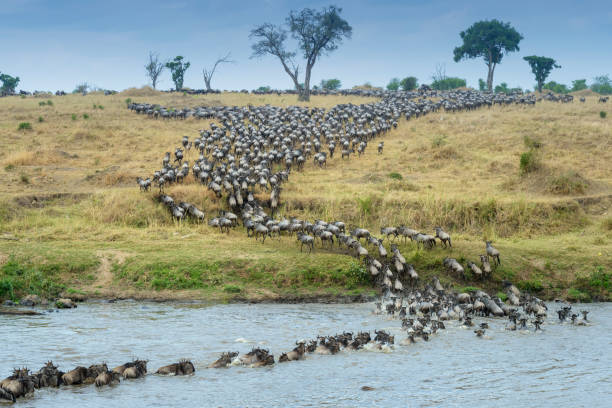
A dramatic river crossing of blue wildebeest during the Great Migration in the Serengeti National Park, best experienced during peak Tanzania safari seasons between July and September.
The Serengeti National Park is highly dynamic throughout the year due to the Great Migration and resident wildlife populations. However, certain months stand out as peak safari periods depending on what you want to experience.
Best Overall: June – October
This period is widely considered the prime safari window for the Serengeti.
From an expert guiding perspective, this is when wildlife viewing becomes highly predictable and rewarding because animals concentrate around shrinking water sources.
Key advantages:
High density of wildlife in open plains
Excellent chances of spotting the Big Five
Clear skies and minimal rainfall improve game drive conditions
Ideal for first-time safari travelers seeking reliable sightings
Wildebeest Calving Season: January – March
This is one of the most biologically significant periods in the ecosystem.
During this time, the southern Serengeti becomes the stage for the mass birth of wildebeest calves, attracting intense predator activity.
Expert highlights:
Thousands of calves born daily in a short time window
Highly dramatic survival interactions in open grasslands
Exceptional opportunities for wildlife photography and behavioral observation
River Crossings: July – September
This period represents one of the most iconic safari spectacles in Africa.
As part of the Great Migration, herds cross major rivers, often facing strong currents and predators waiting along the banks.
What makes it special:
Dramatic river crossings filled with high-risk survival moments
Large concentrations of wildebeest and zebra
Intense predator-prey encounters near river points
One of the most sought-after safari experiences globally
Ngorongoro Crater
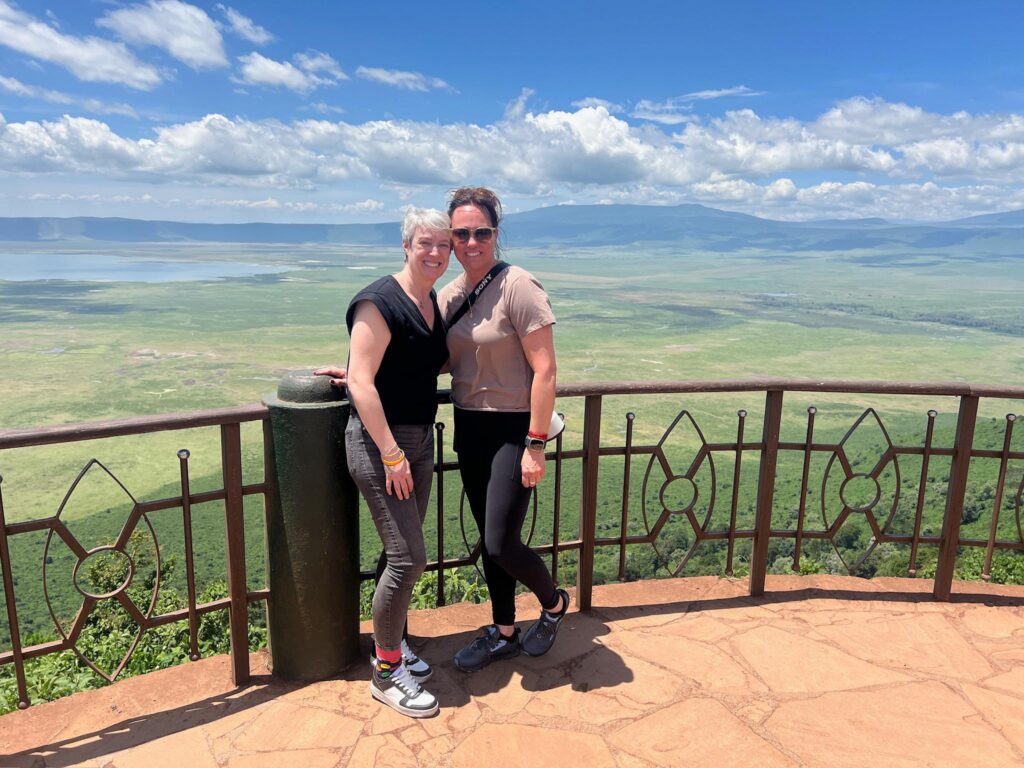
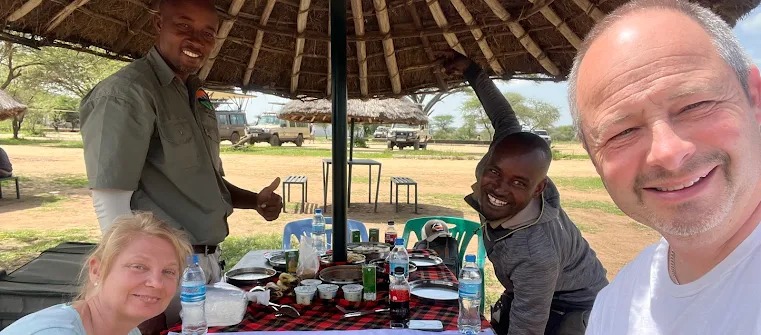
Two international travelers capturing unforgettable moments with the stunning landscapes of the Ngorongoro Conservation Area, showcasing the beauty of Tanzania safari seasons and its year-round wildlife experience.
The Ngorongoro Conservation Area is a year-round safari destination due to its unique geography a collapsed volcanic caldera that traps a high density of wildlife within a relatively small area.
Best Time: Year-Round
From a professional safari standpoint, Ngorongoro offers consistent wildlife viewing throughout the year, making it one of the most reliable destinations in Tanzania.
Why it performs year-round:
Permanent water supply inside the crater
High wildlife concentration in a compact ecosystem
Easy game viewing without long travel distances
Best Wildlife Visibility: June – October
Although the crater is good all year, the Dry Season enhances visibility significantly.
Expert advantages during this period:
Short grass improves spotting of predators and herbivores
Animals gather more predictably around water and grazing areas
Cooler, drier weather improves comfort during crater descents
Higher chances of seeing rare species such as black rhino
Comparison Table: Tanzania Safari Seasons
Season
Months
Wildlife Viewing
Crowds
Price Level
Highlights
Dry Season
June–October
Excellent
High
High
Migration, Big Five
Green Season
Nov–March
Very Good
Medium
Medium
Calving, birding
Wet Season
April–May
Moderate
Low
Low
Green scenery, solitude
Why Season Matters for Your Safari
Choosing the right season helps you:
Maximize wildlife sightings
Save on travel costs
Avoid overcrowded parks
Capture better photography moments
Experience unique animal behaviors
Key travel tip:
If you want drama ? choose dry season
If you want action + babies ? choose calving season
If you want peace + budget travel ? choose green season
Practical Travel Tips from Experts
Book early for June–October safaris
Pack light layers (mornings can be cold)
Use binoculars for distant wildlife
Choose a 4×4 safari vehicle for better access
Always travel with experienced guides
Frequently Asked Questions
What is the best month for safari in Tanzania?
July to October is the best overall period for wildlife viewing.
Can I see the Great Migration year-round?
Yes, but different stages happen in different locations within the Serengeti ecosystem.
Is Ngorongoro Crater good in the rainy season?
Yes, it is accessible year-round and still offers great wildlife sightings.
What is the cheapest time to visit Tanzania for safari?
April and May are the cheapest due to heavy rains and low demand.
Is Tanzania safari good for first-time travelers?
Absolutely. It is one of the best beginner-friendly safari destinations in Africa.
Conclusion
Tanzania remains one of Africa’s most rewarding safari destinations, offering exceptional wildlife experiences throughout the year. However, as professional safari planners, we always emphasize that timing is a key factor that shapes the quality, intensity and uniqueness of your safari experience.
Whether you are witnessing the dramaticGreat Migration river crossings in the Serengeti National Park, observing predator-prey interactions during the calving season, or enjoying the quiet beauty and lush landscapes of the green season, each period delivers a distinct and meaningful wildlife story.
From an expert perspective, there is no “bad time” to visit Tanzania only different safari experiences depending on your travel goals.
At JoyTrekking Tours & Safaris, we specialize in designing tailor-made safari itineraries that align perfectly with your interests, budget and preferred travel season. Our goal is to ensure you experience Tanzania not just as a tourist but through the eyes of a professional safari guide at the right place, at the right time.
With the right planning, every safari becomes a once-in-a-lifetime journey.
What Our Customers Say
Madeline Wayne2024.12.20
Loved January, Ely, Christian, Filbert, Emmanuel, Elias, and the whole crew. Excellent trip led by excellent people. Whole-heartedly recommend this local company with local guides and porters.
Ready to plan your Tanzania safari?
? ContactJoyTrekking Tours & Safaris today to design your personalized safari package ? Let us help you choose the perfect season for unforgettable wildlife moments ? Book early and secure the best safari experience in East Africa
January Mziray is a travel expert and safari consultant with JoyTrekking Tours & Safaris, specializing in East African wildlife tourism. With years of experience guiding travelers across Tanzania’s national parks, January is passionate about helping visitors experience authentic, safe, and memorable safari adventures.